Mailchimp
Not subscribed to OpsMatters Newsletter


Overnight, it was disclosed by Apache that Log4j version 2.16 is also vulnerable by way of a Denial of Service attack with the impact being a full application crash, the severity for this is classified as High (7.5). Snyk is currently not aware of any fully-fledged PoCs or exploits in circulation. CVE-2021-45105 has been issued, and a new fixed version (2.17) has been published by Apache which we recommend upgrading to.
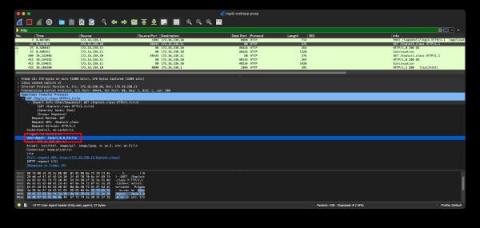
We have published an initial blog on the Log4j exploit and a followup blog with a second detection method for detecting the first stage of exploits occurring over LDAP. Today, we will discuss a third detection method, this one focused on the second-stage download that happens after the first stage completes. In this case, the JVM will download additional Java code payloads over HTTP.
It’s Clint Pollock, principal solutions architect, here for the final lesson in the four-part series on how to use Veracode from the command line in the Cloud9 IDE to submit a software composition analysis (SCA) scan and a dynamic scan. To start, if you’re looking to leverage the Veracode API signing docker image with the Veracode rest APIs, go to the Help Center, go to the Rest API section, and take a look at the available options.
Last week, a researcher from the Alibaba Cloud Security Team dropped a zero-day remote code execution exploit on Twitter, targeting the extremely popular log4j logging framework for Java (specifically, the 2.x branch called Log4j2). The vulnerability was originally discovered and reported to Apache by the Alibaba cloud security team on November 24th. MITRE assigned CVE-2021-44228 to this vulnerability, which has since been dubbed Log4Shell by security researchers.
Five worthy reads is a regular column on five noteworthy items we’ve discovered while researching trending and timeless topics. In this edition, we’ll learn about social engineering, its types, its evolution, and how to avoid falling victim to a social engineering attack. Kevin David Mitnick is considered one of the most famous social engineers among the IT community. Kevin is now a top cybersecurity speaker and a best-selling author.
In the last 18 months, many people have learned a lot about themselves. The solitude of lockdowns, isolation, remote work, and seemingly endless video meetings have taxed everyone’s mental health. One would think that cybersecurity would have been unaffected by these shifts in working environments and habits. After all, many of us are introverted by nature, which is one of the reasons often cited as why we gravitated towards technology as our chosen path.