Mailchimp
Not subscribed to OpsMatters Newsletter


A customer posed this question to me recently; after pausing and smiling (a little too) broadly, he continued, “Their lips are moving.” I thought this would be funnier if it weren’t partly true. The software industry has over-promised and under-delivered for years, making technical executives rightfully skeptical when they hear a new promise. Unfortunately, it’s common for software to lack promised features or to create new headaches when deployed across the enterprise.
The internet’s evolution is transforming our way of life in real time. That includes the experience of being a parent, and to an even greater degree, a young person. Today, it’s not uncommon for kids to have an online presence before losing their first teeth. But we’re only just starting to learn about the impact of these changing habits, and the challenges they’re creating for families around the globe.
Whenever we browse anything on the internet or perform any activity, we leave our trails on the internet. Those trails are digital trails and are called digital footprints. Here we have used the word activities that include everything like visiting a website, sending emails and submitting any information in any online form.
Snyk Code supports various languages important in the cloud native arena, Ruby being among them (and we’ve seen great adoption, so thank you!). Our researchers are constantly monitoring our rule sets, using our training set of open source projects, but also — and, yes this is an advantage of a SaaS service — how the rules do on the code that is scanned. Just as a reminder, Snyk does not use your code to train our sets — but we do aggregate usage statistics.
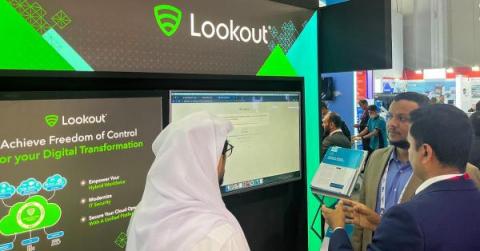
Having lived and worked in Dubai early in my career, I have a great affinity with the Middle East. So when the opportunity to present at Gitex, the region’s premier technology event, and support our local Lookout team, I jumped at it. You might not think of the Middle East as being at the forefront of technological innovation, but if you stroll around Gitex, you’ll find everything from flying cars, robotics, and environment controls to IT and security.
ModSecurity is an open-source web application firewall (WAF) engine maintained by Trustwave. This blog post discusses multiple input interpretation weaknesses in the ModSecurity project. Each input interpretation weakness could allow a malicious actor to evade some ModSecurity rules. Both ModSecurity v2 and ModSecurity v3 were affected. The issues have been addressed in v2.9.6 and v3.0.8, respectively.
Cyber threats are ubiquitous these days, and companies are scrambling to find better ways to protect themselves. But in the world of cybersecurity, not all data is equal, which begs the question: What data should I protect? For instance, it’s one thing to protect routine customer orders, but credit card numbers deserve extra protection. Likewise, access to sensitive financial information related to mergers, acquisitions, or IPOs needs to be limited to a small group of people.
Secure access service edge (SASE), as an architecture, is only three years old, but rapid adoption by organizations is making SASE one of the fastest-growing technology market categories in history. Functionally, SASE will change—and is already changing—how teams make security and networking technology purchases.
With the global economy experiencing a slowdown, security teams are feeling the pressure to reduce costs without sacrificing security. But while it's important to be fiscally responsible, making cuts in the wrong areas can put your organization at risk. Malicious actors know that businesses are under even more pressure during times of economic turmoil.