Security | Threat Detection | Cyberattacks | DevSecOps | Compliance

The New Security Risks of the Agentic Development Lifecycle

For years, application security ran on a simple assumption: software moves through a lifecycle, and security inspects the artifacts as they travel from development to production. Developers plan, write code, commit it, test it, scan it, and ship it. Every control built, including pull request reviews, CI/CD gates, and post-commit scanning, assumed a human was sitting between each step, making decisions a tool could later check.

Why Your Security Investment Isn't Reducing Risk (+What Actually Does)

Security budgets have never been higher. The average enterprise now runs 50 security tools, and most teams added more last year than the year before. And yet, alert fatigue is at the breaking point. Coverage gaps in mobile and API environments continue to widen. The exploitability problem at the center of most AppSec programs remains unsolved. Breaches keep happening. Risk scores don't move.

Five Signals, One Answer: Why Single-Signal AI Security Always Fails

The security industry hasn’t been wrong about agentic AI risk. It’s been incomplete. There’s no shortage of single-signal solutions for the problem: tools that analyze prompts for malicious content, platforms that monitor data access patterns, capabilities that assess model behavior for signs of manipulation. Each captures something real. None is sufficient on its own.

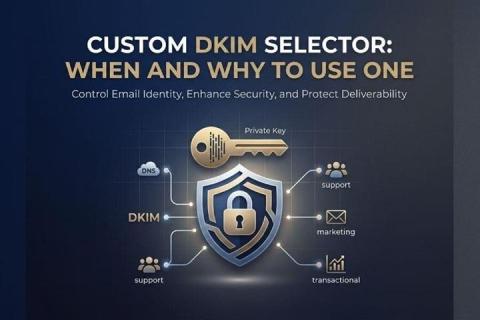
Custom DKIM Selector: When And Why To Use One

A DKIM selector is a label used by DomainKeys Identified Mail to locate the correct public key in DNS during the email authentication process. DKIM works by adding a DKIM signature to outgoing messages. That digital signature is created with a private key controlled by the sending service, while receiving systems use the matching public key published in your DNS records to validate the message.

Unauthorized Drones at Stadiums: a Security Checklist for Major Event Venues

Unauthorized drones have been a persistent security planning challenge for stadiums, arenas, and major event venues in recent years. A single UAS near or over a packed venue can disrupt operations, trigger public safety concerns, delay programming, or force security teams into fast decisions in a complex environment.

Can a Digital Yearbook Include Photos, Videos, and Student Messages?

If you have ever managed a school yearbook committee, you know the drill. You spend months chasing down photos, formatting spreads, and arguing over page counts because every extra piece of paper drives up the printing cost. The print budget dictates everything. But when a school decides to move away from print, the entire rulebook changes.

Data Privacy in Sports: How Secure Is Team Software?

Modern sports teams rely heavily on digital applications to manage their daily operations. Athletes trust platforms with their private profiles, performance metrics, and medical data every day. Guarding digital information requires serious attention from managers and tech developers. Weak protection can easily compromise the sensitive details of entire rosters and leak strategic plans.
Featured Post

AI in the UK: Driving Innovation Without Expanding Cyber Risk

Artificial intelligence is no longer a future ambition for UK organisations. It is already shaping how decisions are made, how services are delivered, and how quickly businesses can respond to change. From automation and analytics to customer engagement and operational optimisation, AI is becoming an integral part of the modern enterprise.

Balancing Protection and Performance in Retail: AI Guardrails for the Modern Enterprise

The video emphasizes the critical need for due diligence when deploying AI, focusing on establishing ethical parameters and safety guardrails. The speaker highlights that for a retailer, security is paramount to protect customer data and credit/insurance services while ensuring a seamless, high-performance user experience. Netskope provides the necessary ethical guardrails and safety parameters required to deploy AI technologies without compromising security.

How Weak AI Governance Increases Organizational Exposure to Risks

‍ Artificial intelligence (AI) is transforming businesses rapidly, but weak AI governance creates significant risks. Without proper oversight, organizations face costly data breaches, operational failures, and damage to their reputation. This article explains why strong AI governance is essential to managing these risks.