Security | Threat Detection | Cyberattacks | DevSecOps | Compliance

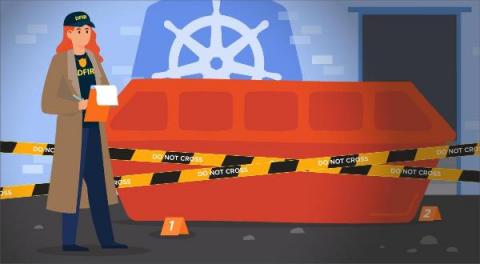
Digital Forensics Basics: A Practical Guide for Kubernetes DFIR

Containerization has gone mainstream, and Kubernetes won out as the orchestration leader. Building and operating applications this way provides massive elasticity, scalability, and efficiency in an ever accelerating technology world. Although DevOps teams have made great strides in harnessing the new tools, the benefits don’t come without challenges and tradeoffs.

Building a secure GraphQL API with Node.js

GraphQL provides security straight out of the box with validation and type-checking. However, it doesn’t fully address security concerns around APIs. In this article, we’ll learn how to secure GraphQL APIs by building a simple Node.js application using Fastify and GraphQL. According to its official documentation, GraphQL is a graph query language for APIs and a runtime for fulfilling those queries with our data.

The Public Sector Has the Highest Proportion of Security Flaws of Any Industry

We recently launched the 12th annual edition of our State of Software Security (SOSS) report. To draw conclusions for the report, we examined the entire history of active applications. For the public sector data, we took the same approach. We examined the entire history of applications for government agencies and educational institutions. We found that the public sector has the highest proportion of security flaws of any industry.

Security at ServiceNow (feat. Karl Klaessig) - The Big Fix 2022 by Snyk

Karl Klaessig, Director of Product Marketing and Security Operations at ServiceNow joins Randall Degges, Head of Developer Relations and Community at Snyk to discuss security challenges and how they approach them at ServiceNow. The Big Fix brought together developers, DevOps, and security practitioners of all skill levels to help make the internet more secure through a month of fixing vulnerabilities, ending in a 24-hour livestream event.

How to Get Security Peace of Mind Against Advanced Email Threats

The dangers of email security are often understated. One successful email attack can lead to malware injection, system compromise, impersonation, espionage, ransomware and more. After all, phishing remains the top attack vector used by hackers. The FBI reported phishing scams were extremely prominent, with 323,972 complaints being made in the U.S. in 2021, compared to 241,342 the previous year. Adjusted losses resulting from these attacks is more than $44 million, a $10 million decrease from 2020.

Announcing Our Next Cloud-native Integration: Nightfall for Salesforce Enters Active Development

At Nightfall, our mission is to discover and secure sensitive data in every cloud application through a cloud-native, accurate, and performant platform. Since 2019, Nightfall has partnered with some of the world’s most innovative organizations to proactively eliminate data security risks across a fleet of SaaS applications via our native integrations for Slack, Atlassian Jira, Confluence, Google Drive, and GitHub.

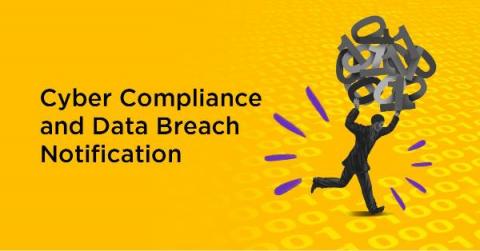
Cyber Compliance and Data Breach Notifications

Ransomware isn’t just an internal threat for your organization, it’s also a global crime, and data breach notifications are governed by various laws, policies, and agencies. Let’s go over some common cyber-compliance questions about ransomware, data breach notification and reporting, and the laws that cover cybercrime.

What Trust and Compliance Looks Like in a Cookieless Digital World

Originally envisaged as a convenient way to store web data, cookies emerged as a powerful marketing tool in the 2000s. For many years, digital marketers relied on cookies for data collection. However, in recent history, new privacy laws, browser features, and plug-ins have changed the landscape of data collection. Marketers have had to develop tools and strategies to ensure they meet compliance as the internet becomes more and more cookieless.