Security | Threat Detection | Cyberattacks | DevSecOps | Compliance

PHP2Shell: Critical PHP Vulnerabilities Enable Unauthenticated Remote Code Execution

On October 21, 2026, the PHP development team released emergency security updates addressing two critical vulnerabilities, CVE-2026-109618 and CVE-2026-109619, collectively referred to by researchers as PHP2Shell. Both vulnerabilities carry a CVSS v4.0 score of 9.2 (Critical Severity) and can allow an unauthenticated attacker to execute code with the privileges of the affected PHP worker process.
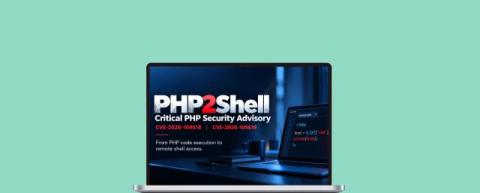
PHP2Shell (CVE-2026-109618 & CVE-2026-109619): Pre-Auth RCE in PHP Core Puts Web Servers at Risk

Two critical vulnerabilities in the PHP core, tracked as CVE-2026-109618 and CVE-2026-109619 and nicknamed PHP2Shell, let an unauthenticated attacker run commands on servers that use an affected PHP build to handle web requests. PHP released fixes on October 21, 2026, a day after details leaked online. Public proof-of-concept code followed within hours, and exploitation attempts were seen as early as October 17. AppTrana customers have been protected against PHP2Shell.

Node2Shell: Node.js Brotli vulnerability allows remote code execution (CVE-2026-111497)

Node.js shipped a security update on Wednesday for a flaw in how it decompresses Brotli data, a bug people are already calling Node2Shell (CVE-2026-111497). If an attacker can get a malicious payload in front of your app, the flaw can crash the process, leak part of its memory, or potentially let them run their own code. Who is affected: anyone running Node.js or Bun whose app decompresses Brotli data that an attacker could control.

Uncovering the eMudhra incident: A Zeek detection

This week, two big vulnerabilities are in the news. The first one is the PHP2Shell vulnerability, for which a Zeek detector was published yesterday. The second, equally important, vulnerability is the compromise of some intermediate certificates of the eMudhra Certificate Authority (CA).

Everything You Need to Know About Secure Remote Storage

Secure remote storage offers a solution to store your important files, including videos, photos, and more, remotely online, so you can access, share, back up, or edit your files online across multiple devices. Throughout this article, we will offer secure remote storage options, explain what are the benefits of using remote storage, and explain how it works, and the different types of storage methods available.

Ep. 90 - SafePay Claimed 590 Victims in 49 Countries Without Needing a Single Zero-Day

SafePay doesn’t need a zero-day. It logs in. The FBI, CISA, the US Secret Service and German and UK police just issued joint advisory AA26-293A on the ransomware crew, and its front door is your VPN. Tova Dvorin and Adrian Culley break down SafePay’s three initial-access routes, the five known CVEs across Cisco ASA, Veeam and SonicWall, its FileZilla, Mimikatz and ShareFinder.ps1 tool chain, and four controls to validate before a stolen password is used.

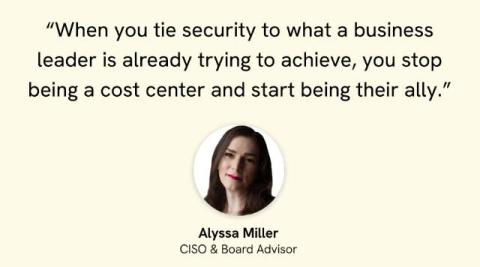
How CISOs report security to the board: 3 foundational steps

A CISO can run a genuinely strong security program and still lose the room the moment they start presenting it to the board. They lead with what they know best: threats, vulnerabilities, mean time to detect, a heat map of likelihood and impact. It’s accurate, but it doesn’t tell the board what any of it means for the business.

Beyond the PHP Patch: How Security Leaders Are Responding to a Week of Critical Incidents

From PHP vulnerabilities to supply-chain compromises, security teams are being forced to make difficult decisions about patching, exposure, and business continuity. Here’s the response from security leaders on critical incidents and the learnings on the front lines. Some days in cybersecurity are busier than others, and then there are days when everything seems to go wrong at once…like October 21.

PHP2Shell: Two Critical PHP Vulnerabilities, How They Work, and What to Do About Them

PHP powers roughly 70% of websites on the internet. WordPress, Drupal, Joomla, and thousands of custom applications run on it. At Astra, we’ve spent years protecting these applications with firewalls, malware scanning, and vulnerability detection. So when vulnerabilities show up in PHP’s core engine, it’s worth paying attention. On October 21, 2026, two critical PHP vulnerabilities were publicly disclosed under the name PHP2Shell.