Security | Threat Detection | Cyberattacks | DevSecOps | Compliance

From 10 Days to Unlimited Retention: How o9 Runs SecOps on Elastic Security

Somesh Agarwal, Senior Director of Security Operations at o9 Solutions, explains how the AI planning platform behind many of the world's largest supply chains consolidated security operations and observability on Elastic Security to gain unlimited threat-hunting retention, accelerate detection engineering, and simplify multicloud security operations.

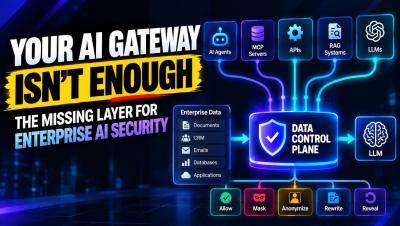
Falcon AIDR Now Protects Copilot Studio Agents and Claude Code

Employees are already using AI at work. They build agents in Microsoft Copilot Studio, write code with Claude Code, and paste sensitive data into chatbots in the browser. Each of these actions can expose sensitive information outside of approved workflows, and most of it happens where traditional endpoint, network, and data loss prevention (DLP) security controls can't see the prompt or the tool call.

Top Security Risks of AI Agents

AI agents are rapidly moving from experimental projects into everyday business operations. Unlike traditional AI systems that generate content or answer questions, AI agents can take action. They can call APIs, access applications, retrieve data, execute workflows, and make decisions with limited human intervention. That shift is creating a new security challenge for enterprises.

Scaling security reviews at 1Password: Solving the context and nondeterminism problems

In our last post, we shared how we began to scale our security code review process with SAGE. We discussed how we gathered historical Product Security (ProdSec) review records to create a 1Password-specific ruleset, the three-stage Finder/Critic/Judge pipeline, and the limitations of our v1 implementation.

The 1Password Environments MCP Server is now on Cursor Marketplace

AI agents are doing more than just generating code. Increasingly, they are working autonomously on complex coding challenges, touching production APIs, databases, and infrastructure across development environments, often without thorough human review. To perform these operations and access multiple systems, agents rely on developer secrets and non-human identities (NHI). But often, developers lack a secure way to share these secrets, leading to overprivileged, invisible access.

How to Turn Cyber Risk Insights Into Concrete Mitigation Decisions

Every mature cyber program eventually hits the same wall. Security teams collect enormous amounts of telemetry, threat intelligence, and control data, and yet the conversation with the CFO about what to fund next still feels like an argument about opinions rather than evidence. The reason is not that the data is missing.

Agent Identity: Why It Matters for AI Security

AI agent identity is a unique, digitally verifiable credential assigned to an autonomous AI system that defines who the agent is, what resources it can access, and on whose behalf it is acting. As AI systems move from answering questions to executing real-world actions independently, agent identity has become the new control plane for enterprise cybersecurity. Legacy identity and access management tools were built for humans behind a login screen and static service accounts running deterministic code.

Future-Proofing Organizations in the Face of AI

Future-proofing organizations in the face of AI requires a unified defense strategy that secures both the human workforce and autonomous AI agents. One of the key requirements is shifting security cultures from reactive compliance to proactive, measurable behavioral change. As artificial intelligence evolves from a supporting tool into an autonomous digital workforce, organizations must adapt their defense frameworks to mitigate both human and agentic risks.

What Security Can Learn From Dinosaurs

In business, calling something a dinosaur is meant to suggest it is slow, outdated and overdue for extinction. Which is unfair to dinosaurs, who enjoyed one of the most successful runs in the history of life. Here is what people think they mean when they use the word. Lumbering. Doomed. Obsolete. A fat target waiting for the meteor. They imagine a tar pit. They imagine extinction. They picture something huge and slow, magnificently unsuited to the world it finds itself in.