Security | Threat Detection | Cyberattacks | DevSecOps | Compliance

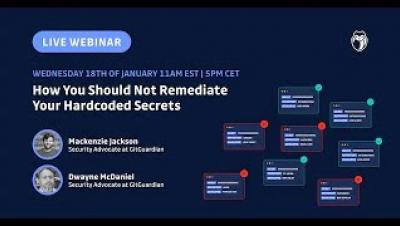
[Webinar] How You Should Not Remediate Your Hardcoded Secrets

If you have ever run a secrets scanner against your entire codebase, it has likely raised hundreds if not thousands of findings, leaving you wondering, "Where should I start?" Unlike other vulnerabilities, hardcoded secrets represent a threat by themselves whether your code is running or not. Attackers with access to a repository will scan it inside out for secrets, turning every occurrence into a risk you cannot ignore. Still, this does not mean that you should treat all incidents equally!
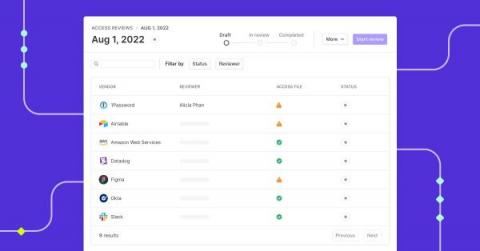

How do you perform quarterly access reviews?

Savvy organizations usually deploy some type of identity and access management (IAM) solution. IAM solutions leverage the principle of least privilege (POLP), role-based access control (RBAC), or other such mechanisms to manage access to data, applications, and IT infrastructure. ‍ However, every organization's structure and human resources capacity typically change over time as new employees are brought on board and existing ones quit.

How Manufacturers Can Fight Back Against Ransomeware

Ransomware attacks are rising. Verizon’s 2022 Data Breach Investigation Report found that nearly a quarter of all cyber attacks in the manufacturing industry are ransomware attacks. Why the surge? While the world is still recovering from the pandemic, global markets are dealing with massive economic uncertainty and recession fears. And cybercriminals sense an opportunity.

Domain member: Digitally encrypt secure channel data

Digitally Encrypt Secure Channel Data is a security setting used for digitally securing the data that’s transmitted over the secure data channel network. The data transmitted between the domain member and the domain controller must be encrypted and secured with the latest technology to ensure that no unauthorized user gets access to the confidential data.
Sponsored Post

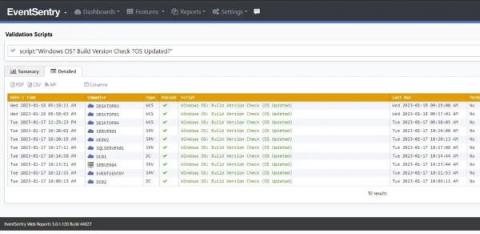
The Life of the Sysadmin: A Patch Tuesday Story

The System Administrator! AKA the Sysadmin. The keeper of the network, computers – well basically all things technology. The one who is hated for imposing complex passwords and other restrictions, but taken for granted when everything works well. They are the first to be called when “facebuuk.com” reports: “domain does not exist”.

Enterprise - Harden Your Systems

We highly recommend Keeper Administrators enable the following security settings. Create two Keeper Administrators in case one account is lost or no longer accessible. Keeper Administrators hold the encryption keys used to access the Admin Console, provision users, manage enforcement policies and perform day to day user administration.

AT&T Cybersecurity awarded the Palo Alto Networks 2022 Partner of the Year Award

AT&T Cybersecurity received the Palo Alto Networks 2022 Partner of the Year Award for its managed security services at the annual Palo Alto Networks Ignite 2022 conference. The awards are presented to an elite group of Palo Alto Networks partners that have excelled in performance, enablement, and engagement over the past year. In an era where security collaboration continues to grow in importance, AT&T Cybersecurity stressed the significance of its relationship with Palo Alto Networks.

4 fundamental questions on EASM - and how Detectify's solution answers them

Security teams know, bug bounty hunters, and ethical hackers know it: Large attack surfaces are hard to manage. In this day and age, if you’re a medium-large organization without a comprehensive External Attack Surface Management (EASM) program in place, there’s a pretty good chance that you have some hosts on the Internet that you’re not aware of. Despite this, the concept of EASM is still new to many.

Building a Strong Small Business Work Culture Focused On Cybersecurity

Small business owners have a ton of things to worry about, but cybersecurity should always remain a top concern. Why? The Allianz Risk Barometer lists cyber incidents as the number one business risk in 2022, ranking it higher than the shortage of skilled workers, complications from the pandemic outbreak, and natural disasters.