Security | Threat Detection | Cyberattacks | DevSecOps | Compliance

Cryptominer detection: a Machine Learning approach

Cryptominers are one of the main cloud threats today. Miner attacks are low risk, low effort, and high reward for a financially motivated attacker. Moreover, this kind of malware can pass unnoticed because, with proper evasive techniques, they may not disrupt a company’s business operations. Given all the possible elusive strategies, detecting cryptominers is a complex task, but machine learning could help to develop a robust detection algorithm.

Controlling your server with a reverse shell attack

Creating and running an application in your favorite language is usually pretty simple. After you create your application, deploying it and showing it to the world is also quite straightforward. The last thing you need is someone to take over your system and fully control your brand new application. In this article, I’ll explain how this can happen with a reverse shell attack. Note that the code examples in this article are for educational purposes only.

Keeper vs Dashlane: Comparing Password Management Solutions

Keeper Security and Dashlane are both password management solutions that offer various user features and benefits. While Dashlane is a basic password manager with a password generator tool, Keeper is a robust, enterprise-grade solution that is only one part of a suite of cybersecurity tools covering password, secrets and connection management. Dashlane allows businesses to instantly generate and save strong passwords for all employee logins. It is supported on desktops, laptops and mobile devices.

Assessing Cybersecurity in M&A Diligence

Here’s why you should check a company’s overall cyber security health before acquiring it: You could be doing a great job protecting your company. But then, if you merge with a business with holes and attackers are already inside it, their problem becomes your problem. So you need to build a rigorous methodology and a playbook to assess the security of your target during the M&A diligence. Here’s how you can do it.

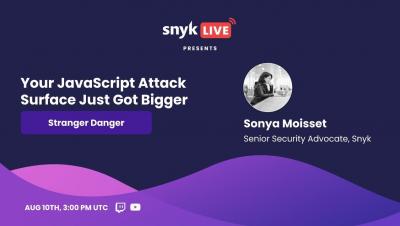
Stranger Danger: Your JavaScript Attack Surface Just Got Bigger

Building JavaScript applications today means that we take a step further from writing code. We use open-source dependencies, create a Dockerfile to deploy containers to the cloud, and orchestrate this infrastructure with Kubernetes. Welcome, you're a cloud native application developer! As developers, our responsibility broadened, and more software means more software security concerns for us to address.

Convergence and adoption of AI and ML countering the cyber threat

During the last few years, we have witnessed an increase in advanced cyber attacks. Cybercriminals utilize advanced technology to breach the digital boundary and exploit enterprises’ security vulnerabilities. No industry feels secure; security professionals do their utmost to close security gaps and strengthen their cyber defense.

Mend API Helps Make SBOMs Simple

The proliferation of third-party software components such as open source software(OSS) has triggered a growing need to keep track of it all. Why? Because when security vulnerabilities inevitably crop up in open source components, it’s pretty important to know whether your company uses that piece of code – or whether it appears in the myriad software dependencies inherent in open source.

What is Privileged Access Management (PAM)? Explained

Privileged access management is a package of cybersecurity strategies and access management tools used for controlling, monitoring, and safeguarding users with privileged access permissions. PAM is widely regarded by analysts and IT teams as a valuable and critical cybersecurity platform, as it's able to achieve high-security ROI.