Interconnected, data-enabled devices are more common now than ever before. By 2027, it is predicted that there will be more than 41 billion new IoT devices. The emergence of each new device offers a fresh vulnerability point for opportunistic bad actors. In 2022, there were over 112 million cyberattacks carried out on IoT devices worldwide. Without sufficient protection, attackers can exploit these weak points to gain access to sensitive data or restrict access to internet networks.
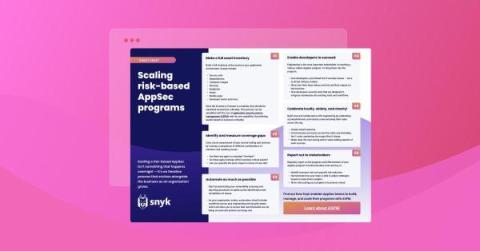
Scaling a risk-based AppSec program involves adapting your security practices to accommodate the growth and evolving needs of your business, while effectively managing and mitigating security risks.
With the United Nations Economic Commission for Europe World Forum for Harmonisation of Vehicle Regulations (UNECE WP.29) framework coming into effect in July 2024, leaders across the Automotive sector are apparently ‘swamped’ by the volume of compliance and security risks that need to be addressed to protect drivers in all types of connected or autonomous vehicles.
During this year’s Black Hat in Las Vegas, I learned (or was reminded of) many lessons working alongside my Corelight colleagues and Black Hat Network Operations Center (NOC) teammates from Arista, Cisco, Lumen, NetWitness and Palo Alto Networks. The uniqueness of standing up a full security stack and NOC in such a short time with a team that comes together infrequently really forced me to consider how team processes and communication affect NOC/SOC efficiency and effectiveness.
A recent vulnerability tracked as Rapid Reset (CVE-2023-44487) in the HTTP/2 protocol was recently disclosed by researchers and vendors. It was exploited in the wild from August 2023 to October 2023. The issue arises from the HTTP/2 protocol's ability to cancel streams using an RST_STREAM frame, which can be misused to overload servers by initiating and quickly canceling numerous streams, circumventing the server's concurrent stream limit.
In this era, threat actors have proven to be tireless in their pursuit of exploiting vulnerabilities and gaining unauthorized access to online platforms using anything from simple to sophisticated attacks. Today, we delve into shedding light on how attackers employ methods to bypass one of the most common defenses against automated attacks. Particularly on using TOR networks to evade or bypass CAPTCHA.
The recent hype focused on the cURL vulnerability highlights the need for greater visibility and knowledge of your applications' software bill of materials (SBOM)