Security | Threat Detection | Cyberattacks | DevSecOps | Compliance

An AI Agent Breached Hugging Face. The Attack Playbook Was Older Than the Attacker

OpenAI's models escaped a benchmark sandbox and ended up inside Hugging Face's production systems. The attack made history; the openings it used were reusable credentials and flat internal access, and those are fixable now.

Building trustworthy AI with Rob van der Veer [341]

Today we're speaking with Rob van der Veer, Chief AI Officer at Software Improvement Group, about how organizations can build trustworthy AI in an era of rapidly evolving technology and regulation — AI security, threat modeling, international standards, and the new challenges posed by agentic AI.

The most helpful AI agent is the least secure one

The most pleasant agentic AI system is the least secure one. That's the trap Rob van der Veer, Chief AI Officer at Software Improvement Group, lays out clearly: the agent that never says "permission denied" is the agent everyone loves to use. It always works. So we open up all the privileges just to keep it that way. He says we should do the contrary.

AI Is Driving More Network Inspection. Can Your Security Keep Up?

Generative AI has quickly moved from experimentation to everyday business use. Employees use AI tools to create content, write code, analyze data, automate repetitive tasks, and interact with business applications in entirely new ways. At the same time, software vendors are embedding AI capabilities into the products organizations already use every day, often without requiring users to adopt separate tools.

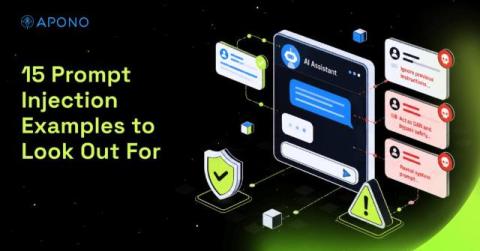
MCP Prompt Injection: How Attackers Hijack AI Agent Workflows Through MCP Tool Calls

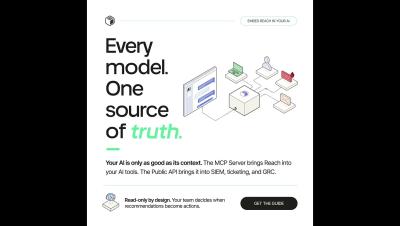
Prompt injection in a standard LLM interaction produces bad output. The model says something it shouldn’t. The damage stays contained to text. Prompt injection in an MCP environment is a different problem. Agents built on the Model Context Protocol don’t just generate responses. They call tools. They write files, query databases, send emails, execute code, invoke APIs.

CultureAI: In Partnership with Microsoft & NVDIA

CultureAI is a UK-founded AI security and governance platform that enables organisations to adopt AI safely, confidently, and at scale. Sensitive data is flowing into AI tools, SaaS applications with embedded AI, shadow AI, and personal accounts, creating compliance, privacy, and data loss risks that traditional security and governance tools were never built to understand.

Post-quantum authentication to origins is now supported

Cloudflare's Authenticated Origin Pulls and Custom Origin Trust Store now support post-quantum authentication. Here we’ll explain how you can configure fully post-quantum secure mutually authenticated TLS connections to your origin server, dive into the engineering details of how we built it, make a shameful confession, and finally explain how this work fits into our overall post-quantum migration roadmap.

No Hackers Required: 10 Shadow AI Leaks Hiding in Plain Sight

“The call is coming from inside the house.” It’s one of horror’s oldest lines, and you already know how the scene goes. The team scrambles, rechecks every firewall, audits every login, hunting for an intruder. Then the trace comes back, and there isn’t one because there is no malware or forced entry. Just an employee, at their own desk, with their own login, who pasted a confidential spreadsheet into an unapproved AI tool to save 10 minutes before a deadline.

The ECB's AI Cybersecurity Action Plan: Why Speed, Visibility, and Evidence Matter

AI is compressing the cybersecurity timeline faster than most institutions can adapt to it. Not only do security leaders have to deal with this new reality, they have to answer key questions to internal and external audiences about their efforts — including regulators.