Security | Threat Detection | Cyberattacks | DevSecOps | Compliance

Securing the AI era: Outpace AI-powered attacks with unified security and observability

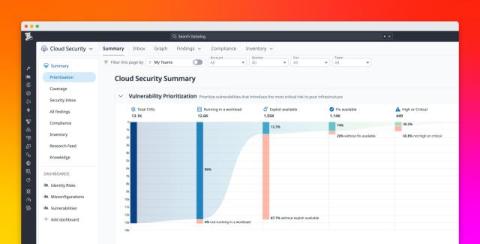
Security teams are dealing with a fundamentally different operating environment than they were a few years ago. AI-assisted development is rapidly pushing more code and infrastructure into production, and according to Datadog’s 2026 State of DevSecOps report, 40% of running services have an exploitable vulnerability.

How MSPs should evaluate AI security

AI is already incorporated into most of your clients’ workflows. Employees are using chatbots and other built-in GenAI tools to draft emails, analyze data and automate work. The challenge? Much of that activity is happening outside your formal security controls, and that creates a new risk layer. For managed service providers (MSPs), the question is no longer whether to secure AI adoption for their clients, but how to evaluate the right AI security solution.

A10 AI Firewall Demo: Stop Prompt Injection and Secure LLM Apps in Real Time

In this demo, see how A10 AI Firewall makes it easy to protect AI applications from prompt injection and other emerging threats. A10 AI Firewall inspects and enforces policies in real time — blocking unsafe prompts while allowing legitimate requests to continue uninterrupted. Explore the intuitive UI for visibility into AI transactions, threat detection, and policy decisions and reasonings.

Deployment Breakdown: Implementing the A10 AI Firewall via Hardware

Deployment Breakdown: Implementing the A10 AI Firewall via Hardware A10 Networks' Arjoyita Roy and Product Manager Luca Labardini discuss the hardware deployment mechanics of the A10 AI Firewall and how it protects machine learning models in real time. Deploying an inline security solution is essential for managing the flow of natural language data. Luca details the hardware approach, which leverages an Application Delivery Controller (ADC) strategically placed between your custom enterprise application and your core AI model to inspect incoming and outgoing traffic.

Ep. 1: Strange Things Are Happening - How North Korean Threat Actors Infiltrated U.S. Businesses

A new breed of worker is quietly clocking in across the United States. They’re writing code, managing your passwords, training the next generation of AI models. They’re gaining trust and access. On paper, they’re the dream hire: skilled, low maintenance, always remote, and often affordable. By most accounts, they’re doing the work. But strange things are happening.

Automating Vulnerability Triage to Overcome the Human Decision Capacity Limit

Most vulnerability management programs don’t struggle because they lack visibility. They struggle because they generate more security decisions than humans can realistically process at scale. Modern security teams already have most of the tools they need to find and assess vulnerabilities. Their real operational challenge is determining which vulnerabilities matter, which teams own them, which findings deserve escalation, and which can safely wait.

From Vulnerability Management to Continuous Security Operations

For years, vulnerability management has been one of the cornerstones of cybersecurity. Organizations scanned their environments, identified weaknesses, prioritized remediation, and repeated the process regularly. That approach still matters. But today's threat landscape has fundamentally changed. Organizations now operate across cloud environments, remote workforces, SaaS applications, identities, endpoints, and increasingly complex networks.

BlueVoyant AI: Our Shared Security Roadmap

Today, we’re launching BlueVoyant AI. In my first months as CEO, I’ve had the chance to meet with many of you. What struck me most is the scope and importance of what you’re protecting, and how seriously you carry that responsibility. What also came through clearly is that your vision for the future of security aligns with ours.

Where Appknox Fits Into the Mobile App Development Tech Stack

Your stack has a SAST. A DAST. An SCA. A SIEM. And probably seven more tools your developers have quietly stopped reading alerts from. None of them were built for mobile. That's not a criticism. It's a fact about what those tools were designed to do. They were built for web applications, network infrastructure, and cloud environments, which were the priorities of a different era. Mobile apps came later. And the security tooling never fully caught up.