Security | Threat Detection | Cyberattacks | DevSecOps | Compliance

From Operations to Policy: Contributing to the Global Fight Against Ransomware

Today, the government of Canada issued a statement announcing that Arctic Wolf will continue to co-chair the Counter Ransomware Initiative Public-Private Sector Advisory Panel in 2026, alongside Public Safety Canada and BlackBerry. The panel will also include member organizations such as Ensign InfoSecurity, the Institute for Security and Technology, Microsoft, Palo Alto Networks, and the Royal United Service Institute.

How Hospitals Sustain Patient Care When Systems Go Dark

In this episode of Building Cyber Resilience: A Healthcare Leader’s Guide, host Josh Howell speaks with Drex DeFord, veteran healthcare CIO, strategist, and President of 229 Cyber & Risk at This Week Health. Drawing on decades of experience leading technology and transformation across organizations like the U.S. Air Force, Seattle Children’s, Scripps Health, and Steward Healthcare, Drex explores what it really takes to sustain patient care when cyberattacks force systems offline.

Security Comprehension and Awareness Measure (SCAM) Demo

What happens when a state-of-the-art AI assistant can read your email, browse the web, and fill in your passwords — but can’t reliably tell a scam from the real thing? In this video, you’ll see real examples of frontier AI agents: These aren’t edge cases. This is the result of 1Password’s new benchmark: SCAM — Security Comprehension & Awareness Measure.

Five shifts that will shape your security team in 2026

The new year brings renewed energy, refreshed goals, and sharper priorities. But at the same time, clarity can be hard to find as AI changes how work gets done, expectations rise, and cyber risk grows. As 2026 begins, several major shifts are already shaping how security teams operate, collaborate, and find satisfaction in their work.

Episode 8 - Enterprise Nervous System: Using Network Signal to Direct Business Strategy

In this episode of Corelight Defenders, I’m joined by Bernard Brantley, Chief Information Security Officer at Corelight, as we delve into the concept of the enterprise nervous system. Bernard shares insights from his extensive experience in network analysis, explaining how organizations can leverage their network traffic data to enhance security and drive business outcomes. We discuss the importance of understanding the interdependencies between assets, processes, and goals, and how security teams can position themselves as integral to business success rather than just risk mitigators.

Vibe Coding & AI Coding Assistants: Who Secures AI-Generated Code?

84% of developers are using or planning to use AI tools in their workflow (Stack Overflow, 2025). AI coding assistants like Codex, GitHub Copilot, and CodeWhisperer are changing how we build software. But here’s the real question: Who secures AI-generated code? In this video, we break down: If you’re using AI to write code, you need: AI-generated code is still code. It must be reviewed, validated, and monitored.

From Activity to Impact: How CTEM Refocuses Security KPIs

For years, security programs reported progress using the same familiar metrics: number of vulnerabilities, patch rates, backlog size. These metrics became the default scorecard not because they reflected risk, but because they were easy to produce. The problem is that these metrics do not measure security improvement. They measure activity. Vulnerability counts rise and fall with scan cadence. Patch rates spike around maintenance windows. Backlogs grow when coverage improves.

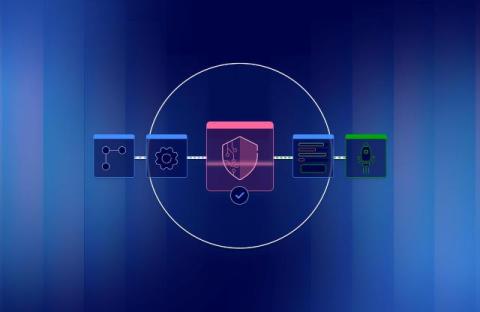
From Acceleration to Exposure: Why AI Demands Mature AppSec

For most engineering teams, AI feels like a breakthrough years in the making. Code gets written faster, reviews move quicker, and releases that once took weeks now happen in days—or even hours. But as more of the software lifecycle becomes automated, a less comfortable reality is setting in: application security hasn’t kept pace, and AI-native security practices are often missing. When AppSec foundations are immature, AI doesn’t reduce risk—it scales it.