In network operations, it’s never the same day twice. Most network engineers love this aspect, but it has a dark side. The best plans often fall to the wayside—in an instant work stops and firefighting begins. In the last year, I’ve been part of a whole-day colo move, diagnosed an outage in the middle of the night, and resolved a slow performance issue. I know what the networking operations experience is like, and I know how much better it can be.
With a growing number of threat sources and successful cybersecurity attacks, organizations find themselves in a tricky spot if they wish to survive cyberspace. Oftentimes, the adversaries are not the challenge; the obstacle is the organization’s culture. Just like culture influences who we are as a people, culture influences the cybersecurity tone of an organization. Every organization has its own unique fit and feel.
IT teams rely on Active Directory (AD) to keep networks secure and maintain user accounts — but they often need to adhere to strict budget limitations when it comes to selecting software to help. That’s why we’ve put together this list of the top free Active Directory management tools. Our picks focus on AD tools that will help you complete routine AD management tasks much faster so your team has time to focus on other priorities.
In the last 90 days, the news of cyberattacks on critical infrastructure has been stunning. From the unprecedented breach represented by Sunburst to the more recent bone-chilling attack at the Oldsmar water facility, the urgency to secure critical infrastructure in transportation, utilities, energy, water, critical manufacturing, telecommunications, healthcare, government facilities and the defense sector has never been higher.
COVID-19 has not only changed the way we live but also forced many changes to standard business processes. This article will explore some challenges around human resource (HR) hiring, offboarding and contracting activities. As companies in multiple jurisdictions continue to look for advice from state and federal authorities on COVID-19 safe work plans, this article offers some security considerations from a physical security as well as cyber security perspective.
One of my absolute favorite aspects of Open Policy Agent (OPA) is the general purpose nature of the tool. While commonly seen in deployments for Kubernetes admission control or application authorization, the large OPA ecosystem includes integrations with anything from databases, and operating systems to test frameworks and REST clients for most common languages.
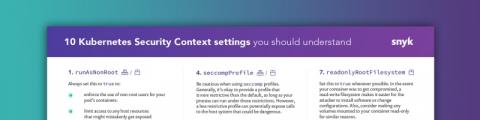
Securely running workloads in Kubernetes can be difficult. Many different settings impact security throughout the Kubernetes API, requiring significant knowledge to implement correctly. One of the most powerful tools Kubernetes provides in this area are the securityContext settings that every Pod and Container manifest can leverage. In this cheatsheet, we will take a look at the various securityContext settings, explore what they mean and how you should use them.
Broken Access Control is #5 in the current OWASP Top Ten Most Critical Web Application Security Risks. It should be viewed in conjunction with Broken Authentication, currently the #2 risk.