Security | Threat Detection | Cyberattacks | DevSecOps | Compliance

Agentic commerce is happening now. Here's what we've learned.

We’ve been collaborating with others to explore when and how agentic commerce will work. Robin Gandhi is the CPO of Lithic, a leading card issuer that’s already seeing agents use its cards to make purchases. Below, he shares his thoughts on what’s changed, and what needs to change, for agentic commerce to become mainstream. Last year, I wrote about the opportunity for agentic payments to revolutionize travel bookings, ad spend management, procurement, and more.

Non-Human Identity Sprawl Is the Hidden Cost of AI Velocity

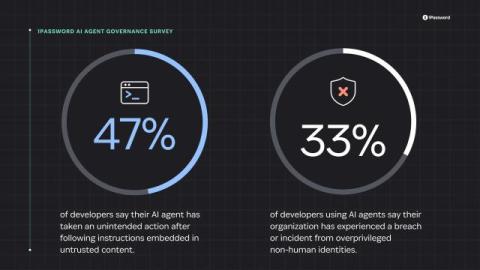
In the current AI boom, we race to use copilots, orchestration scripts, CI workflows, retrieval pipelines, and background jobs. Sometimes, we take for granted that every one of these things needs an identity. Service accounts. OAuth apps. API keys. Short-lived tokens. As AI velocity increases, so does the number of these non-human identities (NHIs). Instead of obsessing over model quality, latency, hallucinations, and GPU costs, we also need to consider how these identities impact security.

Why sensitive data sprawl is your biggest risk #netwrix #datasecurity

Sensitive data sprawl, accumulated access, and unclear ownership continue to increase risk across modern environments. Farrah Gamboa, Senior Director of Product Management at Netwrix, explains why continuous visibility into sensitive data and access is critical to reducing exposure and strengthening security.

Secure Enterprise AI Apps and Agents: Visibility, Governance, Runtime Protection

When you deploy an AI application, do you know what's being sent into it — or what's coming back out? Cato AI Security provides runtime protection for the AI applications your organization builds and deploys, with real-time enforcement, sensitive data anonymization, and a complete audit trail across every interaction.

Ep. 51 - 2026 Cyber War Update: Handala, MuddyWater, and the Rise of Destructive Attacks

Iranian cyber attacks are escalating—shifting from espionage to destructive, large-scale operations. In this episode, we break down what CISOs need to know. Host Tova Dvorin and offensive security expert Adrian Culley analyze the latest Iranian cyber threat activity, including groups like Handala (Void Manticore) and MuddyWater (Mango Sandstorm), and how their tactics are evolving.

Using VM Performance Monitoring to Boost VM Performance

Virtualization is widely used nowadays due to the advantages for business IT infrastructures, such as scalability, cost-efficiency, and convenient administration. Hardware resources of physical servers can be aggregated to resource pools and provisioned for virtual machines (VMs). Sufficient resources allocated to VMs are required for the expected performance of a guest operating system and applications running on the VM.

Stop Policies From Breaking Your Builds

Security policies exist to protect your software supply chain. So why do they keep breaking your builds? This is the unspoken frustration inside most DevOps and security teams today. Supply chain attacks drove 30% of external breaches in 2025. So your security team did the right thing. They added policies to flag packages that are too new, unproven, or missing from the organization’s approved package list.

TeamPCP Supply Chain Attack Campaign Targets Trivy, Checkmarx (KICS), and LiteLLM (Potential Downstream Impact to Additional Projects)

The threat actor TeamPCP has recently launched a coordinated campaign targeting security tools and open-source developer infrastructure by pivoting with stolen CI/CD secrets and signing credentials (such as GitHub Actions tokens and release signing keys). At the time of writing, repositories for Trivy, Checkmarx, and LiteLLM have been impacted, and reports indicate that at least 1,000 enterprise software-as-a-service (SaaS) environments may be affected by this threat campaign.

Trustworthy AI Starts with Better Agents

The difference between an AI feature and an AI-led operating model becomes clear the moment a security problem becomes difficult. In real-world security operations — where the signal is ambiguous, the evidence spans multiple domains, and the attacker is behaving in unfamiliar ways — architecture matters much more.