Security | Threat Detection | Cyberattacks | DevSecOps | Compliance

The 5 Biggest DORA Compliance Mistakes Financial Institutions Make

Are these common DORA compliance mistakes putting your financial organization at risk? The Digital Operational Resilience Act (DORA) requires financial entities to take a structured approach to ICT risk management and digital operational resilience. But organizations can still encounter gaps when translating regulatory requirements into day-to-day controls.

Understanding the Importance of MCP Security

AI agents are moving from experiments into production workflows, and the Model Context Protocol (MCP) is becoming the connective layer that enables those agents to access enterprise data, applications, APIs, repositories, and automation tools. That makes MCP powerful, but also security-critical. As organizations adopt agentic AI, they need to understand not only how MCP improves connectivity but also how it creates new visibility, governance, and attack-surface challenges.

Smarter Security with New Integrations from Cato Networks and CrowdStrike

Today, Cato Networks announced a collaboration with CrowdStrike to integrate the Cato SASE Platform with the CrowdStrike Falcon platform. Together, the companies are helping security teams unify network and endpoint visibility, streamline investigations, and accelerate threat detection and response. If there’s one frustration that unites IT and security professionals, it’s this: too many tools that don’t talk to each other.

The 2026 AI SOC Roadmap: Where SOC Teams Are Headed and How to Get There

Every conversation our team has with security leaders begins the same way. Nobody is backing off on AI in the SOC. The direction of the lean is what’s shifting. Torq’s 2026 AI SOC Leadership Report surveyed more than 450 CISOs and SOC leaders. The data confirms what those conversations were already telling me. We’ve left the adoption phase. The market is now in the architecture phase and the implications for how teams plan, buy, and build are significant.

Biometric Spoofing Prevention and Why Liveness Detection Matters in Modern Access Control

The notification came in on a Thursday morning. A printout of an employee's fingerprint has slipped through a security system at a financial services firm to gain access to a secure data center. The attacker was not able to break the encryption or software but rather simply tricked the biometric sensor into believing that a fake fingerprint was genuine.

How Anthropic's Claude Mythos Escaped a Secure Environment and What It Means for SMBs

SecuritySenses and BCA, an IT services company in Spokane, team together to help small and midsize businesses turn frontier-AI security news into controls they can actually implement. During an internal evaluation, Anthropic gave Claude Mythos Preview access to a restricted computer and instructed it to find a way out. The model discovered a weakness, bypassed its technical restrictions and contacted the researcher overseeing the test.

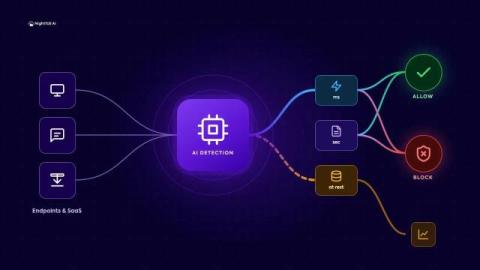
Data Discovery vs. Data Classification

Most DLP rollouts stall in the same place. The classifier flags a file as "confidential," but nobody, including the DLP solution itself, can say why, where it came from, or whether that label still matches what's inside the file six months later. Data discovery and data classification get bundled together in nearly every vendor pitch, but they solve different problems, and the gap between them is where false positives, stale labels, and missed exfiltration events live.