Security | Threat Detection | Cyberattacks | DevSecOps | Compliance

Falcon Cloud Security June 2026 Release: Updates for Azure and Google Cloud

Identities, permissions, exposed resources, and sensitive data can all contribute to risk regardless of whether they reside in AWS, Microsoft Azure, or Google Cloud. However, security teams often encounter uneven visibility and coverage across disparate cloud environments, and face difficulty in consistently understanding risk across a multi-cloud estate.

How oil and gas operators can ensure faster OT recovery

For oil and gas operators, operational technology (OT) is a lifeline, sometimes literally. OT systems are essential to maintaining not just reliable and efficient operations but also safe environments for workers. In upstream production sites, offshore platforms, pipelines, terminals and refineries, critical processes depend on a complex network of OT assets that organizations use to control and optimize operations. Cybersecurity programs for OT often focus heavily on prevention.

Monitor Netskope ADEM scores and remediate with an AI chatbot

Automatically detect when user connectivity degrades in Netskope ADEM and respond instantly with an AI-powered Slack chatbot. In this five-minute flow, we walk through how to monitor Netskope ADEM experience scores for key users and trigger proactive outreach via Slack when performance drops. You'll see how Tines pulls scores on a schedule, creates a case when a threshold is breached, uses an LLM to craft a personalised Slack message, and deploys a Virtual Assistant to help the user troubleshoot in real time.

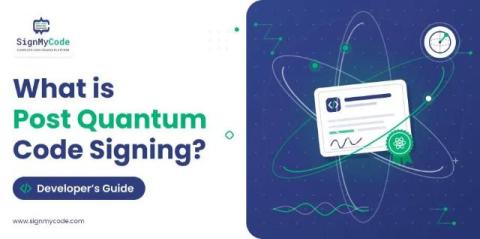
PQC Post Quantum Cryptography Explained: Why Today's Encryption Has an Expiration Date

The encryption protecting today’s data isn’t broken, but it does have a timeline. This video breaks down why current systems like TLS, PKI, and RSA remain secure today, and how quantum computing will change that. As progress accelerates toward large-scale quantum machines, organizations must prepare for a new era of security. Learn how PQC (post quantum cryptography) helps address emerging risks like “harvest now, decrypt later,” and why tracking adoption of quantum-safe encryption is critical now, not later.

Executive Order 14409 Starts a 30-day Clock on Federal Cyber Defense

On June 2, 2026, President Trump signed Executive Order 14409, "Promoting Advanced Artificial Intelligence Innovation and Security." The framing is innovation first. But for federal network and security teams, the practical reality is a short, specific timeline to harden government systems, with AI now active on both sides of the cybersecurity equation. The deadlines are not aspirational.

Snyk VulnBench JS 1.0: Can LLMs Find the Same Bugs Twice?

We ran 300 vulnerability-finding scans to measure how repeatable an agentic LLM security review is on the same code, prompt, and harness. The headline result is not that one scanner "wins" a self-referential leaderboard. It is that LLM security findings are unevenly repeatable: reference-matched findings were stable, but extra-model reports varied widely from run to run.

Digital Sovereignty: What It Is and Why It Matters

Who actually controls your data, your infrastructure, and the software your organization runs on? That question is on the agenda of every CIO and DevOps lead. Digital sovereignty has become a strategic priority, but what does it look like in practice? And why should IT teams care beyond the policy headlines?

What is Enterprise Risk Management (ERM)? Everything you need to know

Accelerating security solutions for small businesses‍ Tagore offers strategic services to small businesses. A partnership that can scale‍ Tagore prioritized finding a managed compliance partner with an established product, dedicated support team, and rapid release rate. Standing out from competitors‍ Tagore's partnership with Vanta enhances its strategic focus and deepens client value, creating differentiation in a competitive market.

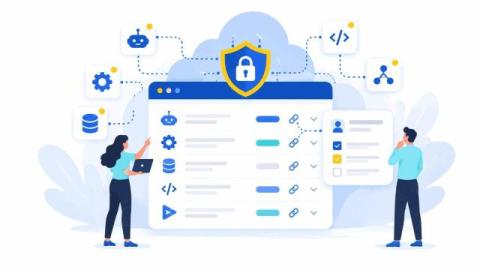
What Is Agentic AI Security? Why AI Agents Need a New Security Model

AI systems are starting to do more than generate answers. Across customer support, IT operations, software development, and internal business workflows, organizations are deploying AI agents that can retrieve information, use tools, interact with applications, and complete tasks with limited human involvement. This shift is happening quickly. According to a McKinsey Report, 62% of organizations are already experimenting with AI agents, while 23% are actively scaling them across parts of their business.