Windows 10 End of Support: How to Stay Protected

Today marks a significant milestone in the technology landscape. As of October 14, 2025, Microsoft has officially ended support for non-LTSC releases of Windows 10, concluding one of the most widely adopted operating systems in history. From this point forward, the operating system will no longer receive security updates or feature patches by default. While Microsoft offers Extended Security Updates (ESUs) for Windows 10 version 22H2, these are temporary and designed as a bridge solution.


How agentic AI in security changes the game: Benefits and challenges

As AI and automation become the norm, more and more organizations lean on them to streamline decision-making processes across business functions, including security. ‍ Traditional AI solutions take on repetitive and time-consuming tasks, freeing teams to focus on higher-level strategy and growth.

How CrowdStrike Stops Living-off-the-Land Attacks

Adversaries have shifted their tactics away from traditional malware and toward approaches that exploit the very tools organizations rely on. Instead of introducing malicious files that can be blocked outright, attackers weaponize legitimate applications such as built-in Windows utilities, remote monitoring and management (RMM) tools, file transfer software, and administrative programs.

Beyond VDI: Security Patterns for BYOD and Contractors in 2025

Remote work is no longer a contingency – it’s the operating norm. Yet the security posture for that work often leans on virtual desktops as a default, even when the workforce is dominated by bring‑your‑own‑device (BYOD) users and short‑term contractors. Virtual desktop infrastructure (VDI) can centralize risk, but it can also centralize failure, expand the admin plane, and add latency that users will work around.

Understanding the Colt Attack

As Jaguar Land Rover (JLR) announces a return to operations after a six-week disruption, a lengthier, less publicised UK-based cyber-attack recovery remains unresolved. Perhaps the relative quiet is because Colt Technology Services, a critical connectivity and trading network serving major banks and stock exchanges in ~30 countries, is not a household name like JLR, Co-Op, or M&S. Or perhaps it’s because the narrative doesn’t fit the now-expected Scattered Spider storyline.

Static Code Analysis: The Complete Guide to Getting Started with SCA

Static code analysis wasn’t always built into the development process. That means most bugs were detected during testing, after the code was already merged and deployed. By that point, fixing issues was time-consuming, expensive, and risky. Small mistakes slipped into production. Security gaps widened and quality suffered. Static analysis shifts all of that left by bringing security and quality checks into the earliest stages of development.

Reaching Peak Understanding of IoT and ICS Risk

In a world where internet connectivity intersects with just about every facet of our physical world—from cameras and door locks to power grids and factory robots—cyber risk intelligence has moved well beyond just protecting the bits and bytes of logical IT ecosystems. Security and risk professionals also have to be on the lookout for and aware of improperly secured cyber physical devices, like IoT devices, which greatly expand the enterprise attack surface.

Tanium Ask Agent - Autonomous Endpoint Management - Tanium Tech Talks #142

Tanium has released jaw-dropping new agentic AI capabilities on the journey of Autonomous Endpoint Management (AEM). Actionable insights and recommendations at your fingertips! Achieve your Tanium goals even faster with assistance from the new Ask Agent: AI agent prompting for Tanium docs, data, and actions Deploy software Summarize dashboards Export executive summary reports RBAC aware Multi-threaded AI sessions And more!

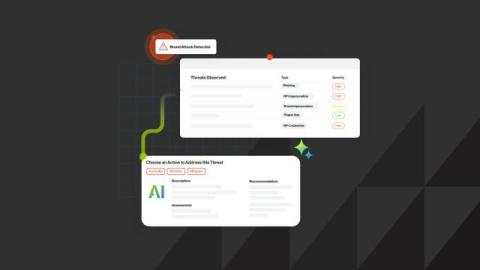
Get Ahead of Digital Impersonation with Brand Threat Intelligence

Trust isn’t just a nice-to-have. It’s the foundation your organization is built on, fueling everything from customer loyalty to stronger partnerships and confident employees. But today, trust must be built across more digital channels than ever: websites, social platforms, app stores, and much more.