Understanding MySQL Database Backup Fundamentals

Losing a MySQL database without a backup means losing customer records, transactions, and your business’s good reputation. Whether you’re running a single application or managing containerized workloads, you need a backup strategy that works when disaster strikes. The challenge isn’t just creating backups but making sure that they’re consistent, they’re recoverable, and they match your recovery time objectives.

After the AWS Outage: How to Build Systems That Survive

When AWS goes down, the ripple effects are global, from authentication failures to service disruptions that bring businesses to a standstill. But while every outage makes headlines, the real question is: Why are so many organizations still unprepared? In this live fireside chat, Wallarm’s Field CTO, and STO of Security Edge, Tim Ebbers, unpacks the architectural lessons behind the latest AWS outage — and what engineering, DevOps, and security leaders can do today to prevent history from repeating itself.

New API testing category now available

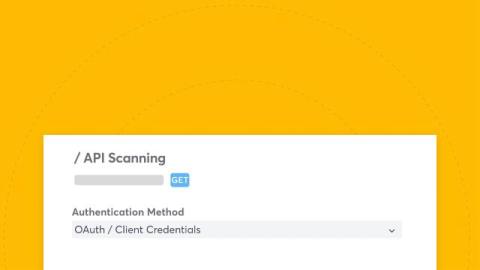
Our API scanner can test for dozens of vulnerability types like prompt injections and misconfigurations. We’re excited to share today that we’re releasing vulnerability tests for OAuth API authorization for organizations that use JWT tokens. These JWT, or JSON Web Tokens, are meant to prove that you have access to whatever it is you are accessing. One of the most critical JWT vulnerabilities is algorithm confusion.

Shadow IT: The Haunting Inside Your Network

According to Bitsight TRACE’s 2025 State of the Underground report, the most exposed devices tied to critical vulnerabilities were found in the United States, and the most affected sectors included Information (telecom, IT) and Professional, Scientific, and Technical Services (including security and software vendors).

A Framework for Cloud Resilience: Practical Steps to Harden Your Software Supply Chain

This user quote, captured on Reddit, underscores the real-world consequence of cloud outages: when it happens, the world stops. As your organization scales, you often make strategic decisions to centralize your workloads, whether it’s meeting strict regulatory requirements that demand data locality, or minimizing latency for compute-heavy applications. The true challenge isn’t deciding which cloud vendor to go with; it’s mitigating the risk of a single point of failure.

Dual-Platform Backdoor from a South Asian Threat Group: StealthServer

In my ongoing monitoring of cyber threats in South Asia, I’ve encountered a series of advanced persistent threat (APT) activities. This region has long been a hotspot for sophisticated cyberattacks, with various groups ramping up their operations in terms of frequency and technical complexity. Starting from early July, I’ve captured multiple new malware samples targeting both Windows and Linux platforms.

Data Backups In Terms of Data Residency

Nowadays, thinking about backups in terms of redundancy alone is old-fashioned. Along with the ‘what’ and ‘how’ approach, it’s vital to ask ‘where’. And it’s not a matter of GDPR or HIPAA requirements. Knowing about your backup location(s) can be a factor that distinguishes between mere compliance and a catastrophe.

Hidden Cyber Threats in Business Acquisitions: What Buyers Often Miss

Buying a business can feel like stepping into a new world of opportunity — more revenue, a stronger market presence, and a ready customer base. But in today’s landscape, every new business also comes with something unseen: inherited cyber risks. From customer records to cloud software and connected devices, digital operations now sit at the heart of almost every business.

Building a Flexible AI SOC with Tines Agents

AI-powered SOCs are dominating industry conversations, yet security leaders remain split on whether a truly autonomous SOC can ever exist. Despite certain vendors aggressively marketing fully autonomous SOC solutions, Gartner's analysis "Predict 2025: There Will Never Be an Autonomous SOC" suggests solutions in the market are unlikely to deliver against claims of full autonomy. As someone who has run SOCs, I agree. Full autonomy isn’t the answer.