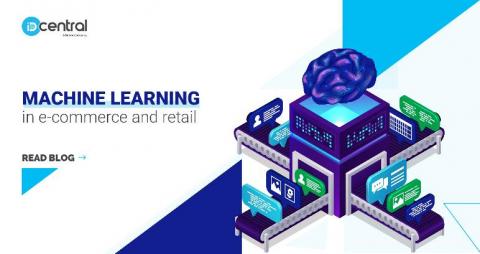
Use of Machine learning for pricing strategy in e-commerce and retail Industry

Pricing can be a thorny task. Pricing challenges and intense competition in ecommerce markets have shot up drastically in the emerging age of internet because of price transparency. There is always a cheaper alternative or a costlier alternative of almost everything you see on an e-commerce website. Any person with a high threshold of time would explore all the options before investing the money into something.

Top Benefits of Using an Employee Time Tracking App

Did you know that you can use your employee time tracking app for more than digitizing worker timecards? Computer monitoring software with timekeeping capabilities is the ideal tool for maximizing company-wide productivity and profitability. Keep reading to learn about the benefits of using an employee time tracking app.

INETCO Insight for Payment Analytics and Business Intelligence Data Streaming - 3 minutes

Is your ability to harness massive volumes of payment transaction intelligence over multiple card rails, customer facing channels, and disparate data stores a challenge? INETCO Insight accelerates digital transformation with a real-time, 360-degree view of all card usage, channel performance and customer behavior to help identify new ways to acquire customers, deliver more value to existing ones, and enhance profitability through faster reporting, better device placement and targeted service offerings.

Application Security Testing: Security Scanning Vs. Runtime Protection

The application layer continues to be the most attacked and hardest to defend in the enterprise software stack. With the proliferation of tools aimed at preventing an attack, it’s no wonder the application security testing market is valued at US 4.48 billion. Forrester’s market taxonomy breaks up the application security testing tools market into two main categories: security scanning tools and runtime protection tools.

How to Improve MySQL Security: Top 11 Ways

In the pantheon of open source heavyweights, few technologies are as ubiquitous as the MySQL RDBMS. Integral to popular software packages like WordPress and server stacks like LAMP, MySQL serves as the foundational data platform for a vast majority of websites and cloud services on the internet today. Unfortunately, its popularity translates to more commonly known attack vectors and security exploits —the following are 11 ways to shore up MySQL security and protect your data more effectively.

IIS Security: How to Harden a Windows IIS Web Server in 10 Steps

Microsoft Internet Information Server (IIS) is widely used in the enterprise, despite a less-than-stellar reputation for security. In fact, for many “IIS security” is a contradiction of terms—though in all fairness, Microsoft's web server solution has improved significantly over the years. IIS 8.5 for server 2012 R2 and IIS 10 for 2016 have been hardened and no longer present the dangerous default configurations of older IIS iterations, but can still be further tightened.

A Typo Shouldn't Impact Your Company's Future

With all the email, documents, Slack messages, and other artifacts that come through my purview each day, I think the language gods will forgive me for a few typos. But I would hate to think that a keystroke error could result in an irrecoverable breach of my company’s most private data. Seems a bit dramatic, no? According to a recent Forbes article, Dropbox users face this very issue when sharing sensitive data.

Planning Your Vendor Security Assessment Questionnaire [2020 Edition]

Business partnerships require trust, but knowing whether your vendors merit that trust is difficult. With the rise of information technology, the ways in which trust can be broken, intentionally or unintentionally, have multiplied and become more complex. Vendor security assessment questionnaires are one method to verify that service providers follow appropriate information security practices so your business can weigh the risk of entrusting them with your data.

The History of Vendor Risk Scoring

Vendor risk scoring is a practice that has emerged to address the complexity of vendor management by assigning vendors a single score– typically a number or letter grade– to facilitate comparison between vendors and portfolios. The past decades of digital transformation have provided both the need for innovative IT security hygiene assessment techniques and the technological capabilities to gather and analyze the data necessary to give those risk scores predictive power.