
Top 8 Attack Surface Management Solutions for 2022
The flip side of ubiquitous digital transformation and increased reliance on remote work due to the pandemic is that malicious actors get more opportunities to strike. Security perimeters are no longer distinct, and the range of potentially vulnerable enterprise assets is dynamically swelling. As a result, companies big and small are sailing into the perfect storm of cybercrime.
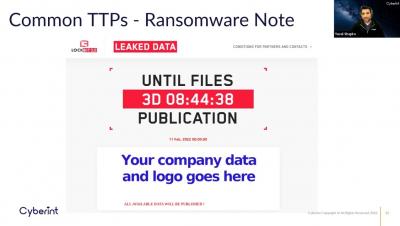
2021 Ransomware Recap Webinar Feb 22
In this webinar we learn about 2021's worst ransomware groups, their TTPs, and Cyberint Research's predictions for 2022.
How Teleport Uses Teleport to Create and Maintain Shared Demo Environments
Our Solution Engineering (SE) team is full of individuals who have vast real-world experience building and maintaining complex IT access systems with sophisticated audit layers through their work as DevOps engineers. The problems that we have all faced before joining Teleport are the exact problems that our customers face. So when it comes to our demos, we like to show real-world scenarios aligned to customer usage patterns, in environments similar to our customers.

Interacting with Gmail mailboxes
Step one of any automation Story is to get information into Tines. This can be done in several ways, including via a Webhook or polling for alerts. But in many cases, the starting point will be through email.
ISO/IEC 27001 Compliance Self-Assessment: The Ultimate ISO 27001 Requirements Checklist
For organizations looking to reassure customers that excellent data governance is one of their guiding principles, and that they’re doing everything in their power to mitigate the risk posed by cybercrime, ISO/IEC27001 certification is one of the best ways to demonstrate that commitment. Nevertheless, it’s a high standard to achieve. According to data supplied by ISO.org, only 28,426 companies worldwide had achieved the certification by 2022.

How to Secure Personally Identifiable Information (PII)
PII, or Personally Identifiable Information, is any information that directly or indirectly identifies an individual, such as name, address, payment information, or contact information. The U.S. The Department of Homeland Security defines a second category of PII: Sensitive PII, which includes Social Security Numbers, driver’s license numbers, Alien Registration numbers, financial or medical records, biometrics, and criminal history.

DevSecOps Is Mainstream: New Research Finds 20x Increase in Software Security Scanning Over the Past Decade
Veracode State of Software Security report reveals the average cadence for organizations scanning apps has grown 20x since 2010. The number of apps scanned for security flaws per quarter has more than tripled over the past decade. Businesses with hands-on security training for developers fix software flaws 35% faster.
Understanding Data Context and Successful Zero Trust Implementations in 5 Scenarios
The nature of business today is increasingly decentralized. Cloud applications are exploding. Data is everywhere. And a large number of users will continue to work remotely even post-COVID-19. While all of these things increase business agility, they also increase an organization’s attack surface. The concept of Zero Trust is generating a lot of buzz as a panacea for these new risk exposures—and for good reason.

Announcing the 12th Volume of Our State of Software Security Report
The 12th volume of our annual State of Software Security (SOSS) report is now live! Rather than examining a single year of activity associated with an application, in this year's report we looked at the entire history of active applications. By doing so, we can view the full life cycle of applications, which results in more accurate metrics and observations.