Zero standing privilege (ZSP) is an applied zero trust security strategy for privileged access management (PAM). The term zero standing privilege was coined by an analyst at Gartner. In practice, it implies no users should be pre-assigned with administrative account privileges. Zero-trust security forbids authorization based on static predefined trust boundaries.
In this world, nothing is certain except death and taxes. The latter of which malicious actors capitalize on seasonally with phishing attacks. From consumers to corporate finance and human resources (HR) departments, these social engineering attacks have become so pervasive that the IRS issued an annual advisory as a warning to businesses and consumers.
For security teams, properly managing which users can access resources and governing the level of access those users have is about as basic as locking the door at night. Understandably then, there are thousands of options available to fine-tune or revoke access, and it’s likely that issues come up daily for most companies—if not hourly.
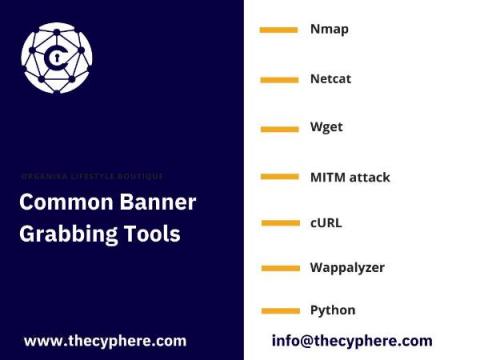
As we all know, whenever it comes to penetration testing, the first thing which comes to mind is reconnaissance. Banner grabbing is used in the initial phase of reconnaissance to get an idea about the target system or application.
Rapid and constantly-evolving software development cycles have increased the need for reliable and fast infrastructure changes. Thus manually carrying out infrastructure changes has become an unscalable process – which is what Infrastructure as Code (IaC) tools are here to solve. They enable teams to codify their infrastructure configurations and integrate them directly into their CI/CD pipelines.
Overview The internet is abuzz with the disclosure of CVE-2022-22965, an RCE vulnerability in Spring, one of the most popular open-source frameworks for Java applications in use today. Known as “Spring4Shell” or “SpringShell”, the zero-day vulnerability has triggered widespread concern about the possibility of a wave of malicious attacks targeting vulnerable applications. Is this Log4j 2.0?