Threat Update: CaddyWiper

As the conflict in Eastern Europe continues, the Splunk Threat Research Team (STRT) is constantly monitoring new developments, especially those related to destructive software. As we have showcased in previous releases in relation to destructive software and HermeticWiper, malicious actors modify their TTPs in order to become more effective and achieve their objectives.


BERT Embeddings: A Modern Machine-learning Approach for Detecting Malware from Command Lines (Part 2 of 2)

CrowdStrike data science researchers recently explored and experimented with the use of Bidirectional Encoder Representation from Transformers (BERT) for embedding command lines, focusing on anomaly detection, but without detailing the model itself. Diving deeper into that research, CrowdStrike researchers explain the reasons for using BERT for command line representation and how to train the model and assess its performance.

Automated Software Supply Chain Attacks: Should You be Worried?

From the factory floor to online shopping, the benefits of automation are clear: Larger quantities of products and services can be produced much faster. But automation can also be used for malicious purposes, as illustrated by the ongoing software supply chain attack targeting the NPM package repository. By automating the process of creating and publishing malicious packages, the threat actor behind this campaign has taken things to a new scale.

Browsers tormented by open roll vulnerability

“Never click unexpected links!” Ever hear someone yell this? Virtually every person in tech has a healthy suspicion of random links; it is for a good reason. Every now and then there are huge leaks from industry leaders as a result of a targeted campaign. One of the most reliable ways to “phish” someone, or exfiltrate their credentials, is to abuse an open redirect vulnerability in a safe-looking website and redirect the victims to a malicious one.

Mind the gap: The state of secrets scanning in 2021

Consuming secrets is a cornerstone for connectivity between applications and infrastructure. Whether it be cloud identity-based secrets such as IAM role keys from AWS, or FTP accessibility credentials - secrets such as these are often discovered by malicious users. The common culprit is usually in a public space such as public repositories on GitHub. While it's easy to think "that will never happen to us", it only takes one misplaced key pushed to the wrong repository for your entire infrastructure, application, and databases to be compromised and exposed.

The DevOps Guide To Vulnerability Management Tools In 2021

Imagine you are in charge of maintaining data for some of the most secretive government offices and powerful business entities globally. You have a significant investment in your security apparatuses protecting that knowledge. For years you haven't had a single blip or incident to cause any suspicion. Then the unthinkable happens, and from a single weak point, your entire network is compromised by malicious code hidden in an innocuous update.

Boost Your Information Security to Meet ITAR Compliance

The U.S. Government requires all manufacturers, importers, exporters, and brokers of defence articles, defence services or related technical information to meet International Traffic in Arms Regulations (ITAR) compliance. Applying these regulations to your business and to those within the greater supply chain introduces additional costs, rigor, and complexity into your processes. This whitepaper introduces 5 essential checkpoints of ITAR and provides strategies to assist with compliance and cyber resilience.

4 golden reasons for equipping your SOC with ManageEngine Log360

Cyberattacks are fast becoming a part of our daily lives. Multiple sources such as Norton Security and Forbes suggest that since the pandemic, attacks are not only increasing in number, but they are becoming more targeted and sophisticated. The attackers using Ransomware as a Service and double extortion techniques are prime examples of how sophisticated attacks are becoming these days. Norton Security states that there are more than 2,200 cyberattacks on a daily basis.

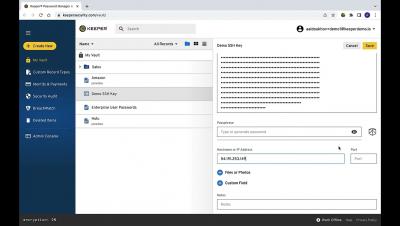
Keeper Commander - Using SSH Command

Keeper Commander can establish basic SSH connections through the command line interface on any device using the native SSH connection tool. Commander's ssh command provides instant SSH connections for any "SSH" Record Type in the vault. To create an “SSH” type record in your vault, create a new record and select “SSH key” as your record type. Paste your private key to the appropriate field in your record and populate the login and hostname fields.