Introducing our brand new (and free!) Calico Azure Course

Calico Open Source is an industry standard for container security and networking that offers high-performance cloud-native scalability and supports Kubernetes workloads, non-Kubernetes workloads, and legacy workloads. Created and maintained by Tigera, Calico Open Source offers a wide range of support for your choice of data plane whether it’s Windows, eBPF, Linux, or VPP. We’re excited to announce our new certification course for Azure, Certified Calico Operator: Azure Expert!

Cyberattacks Targeting NFT Marketplaces and Cryptographic Aficionados

Everything technology touches gets a digital makeover and the creative space wouldn’t be the exception. Non-fungible tokens (NFTs) are virtual assets that represent objects influenced by art, music, games, and videos. You can only buy them online, likely with cryptocurrency. NFTs are generally encoded with the same underlying software as many cryptos. In fact, they are part of the Ethereum blockchain, a cryptocurrency, like bitcoin or dogecoin.

npm package hijacking through domain takeover - how bad is this "new" attack?

When relying on a 3rd-party package from a non-commercial entity, there is always the risk of lack of support, especially when it comes to outdated packages and versions. If the package stops being maintained, nobody will implement a new feature we might need or fix a newly-discovered security vulnerability. Consider, for example, CVE-2019-17571. A critical remote code vulnerability which was never fixed in Log4j 1.x, since it was not supported anymore, and only fixed in Log4j 2.x.

How Can OEMs Reduce Their Risk of Cyberattacks?

Many modern businesses in almost every sector of the economy are adopting the latest technologies for greater connectivity and efficiency. However, while many of these technologies offer myriad benefits, they can also create new cybersecurity vulnerabilities. While much of the focus has remained on manufacturers and how they can bolster their cybersecurity efforts, another group of businesses also needs to improve their cybersecurity.

Why Web Application Visibility Is Important to JavaScript Security

Web application visibility is all about the insight and control application security professionals have into the software operating on the front end or client side. Sitting down to write about why web application visibility is important to JavaScript security, I was reminded of a folk song about coding that was popular back in the 1980s. (Yes, you read that right. A popular folk song about coding. Fans of Stan Rogers or listeners of the cult-favorite, syndicated radio show known as Dr.

Cybersecurity Measures Every Project Manager Should Know About

Online projects could be easy prey for cybercriminals due to the involvement of critical security information (emails, different platforms' login passwords, bank accounts, etc.) and multiple people. A simple phishing email requesting new login credentials or bank account details could be effective on negligent team members and could put everybody at risk. In other words, any breach of information by a project team member could lead to a disaster for the parties involved.

Featured Post

Port scanners and open ports: What you should know

When it comes to securing your network from intrusion or attacks, one of the most commonly followed security measures is to regularly scan your network ports and close all open ports. This is because open ports can expose your network to several security vulnerabilities. To tackle the risks introduced by open ports, network admins rely on port scanners. Port scanners help you identify, inspect, and analyze network ports, and aid in reducing your network's attack surface by closing open ports. This makes port scanners an indispensable tool to ensure network security. In this post, we discuss what open ports are, their vulnerabilities, and how you can defend your network with port scanners.

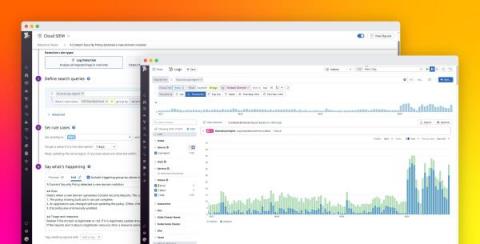
Monitor Content Security Policy violations with Datadog

Content Security Policy (CSP) is a W3C standard that helps defend web applications against cross-site scripting (XSS), clickjacking, and other code injection attacks. CSP is often deployed by using an HTTP header (or, less commonly, a element) to specify which types of resources are allowed to load on your site and where those resources can come from.

Public Sector Demand for Devo Solutions Leads to New Partnerships & Contracts

Following our February announcement that Devo has been designated as FedRAMP “In-Process,” I’m excited to report that our public sector momentum continues in other key areas. Here are some recent highlights: All of this momentum and growth is an affirmation of the excellence of the Devo Platform and the exceptional quality of our success services to support them. And it also demonstrates Devo’s long-term commitment to serving our customers and partners in the public sector.