The Security Debt Crisis: Why 82% of Organizations Are Struggling

Modern software development has a fundamental problem: we are writing code faster than we can secure it. This creates security debt, a quantifiable backlog of unaddressed vulnerabilities that lingers for over a year. Much like financial debt, it compounds interest over time, but the currency is risk. Despite increased investment in security tools, this backlog is growing, not shrinking. With security debt reaching a critical mass in 2026, organizations must shift their strategy.

How Risky is Sending a Sensitive Work Email to the Wrong Person?

Sending a work email to the wrong person – it’s something all of us have done at least once in our working lives. For some people, it’s a regular occurrence. But just how risky is it? Thinking back over your recent emails, you can probably pick out the ones that would have been worse to misdirect than others. In the best case it’s a non-issue or only slightly embarrassing.

Continuous Mobile Security Lifecycle: Appknox's Guide for Enterprise AppSec

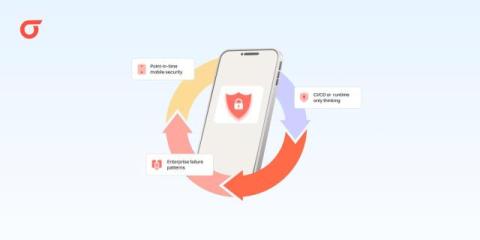
Mobile app risk rarely emerges from negligence. It emerges from fragmentation. In most enterprises, security is applied in stages: Each control works in isolation. None governs how risk evolves over time. Mobile applications are distributed, long-lived systems. Once deployed, they operate outside centralized infrastructure control, exposed to shifting SDK dependencies, evolving APIs, regulatory change, and adaptive adversaries. Security gaps rarely appear within a stage. They appear in the transitions.

Writing our own future: CKO 2026 and the launch of the Tines Almanac

The last 12 months have been the most challenging in Tines’ history. They’ve also been the most successful. We navigated macroeconomic headwinds and breakneck technological innovation. At the same time, global growth and scale demanded new operational discipline and relentless focus. But alongside those challenges came major milestones. We maintained a world-class 122% net revenue retention (NRR).

AI Compliance: 5 Key Frameworks, Challenges, and Best Practices

AI compliance ensures AI systems follow laws, ethics, and standards by managing risks like bias, privacy violations, and lack of transparency through robust governance, documentation, and continuous monitoring, using frameworks like the EU AI Act and NIST AI Risk Management Framework (RMF) to build trust and avoid penalties in developing, deploying, and operating AI.

IT Support & Services Powered by Data and Intelligence

In the modern enterprise landscape, IT support has evolved from reactive, ticket-based troubleshooting to a data-driven, intelligent discipline shaping strategic business decisions. At the core of this transformation is the integration of artificial intelligence (AI), predictive analytics, and automation-collectively redefining how organizations approach their digital infrastructure. As businesses navigate increasingly complex IT environments, support services must keep pace, offering not only resolution but foresight, optimization, and resilience.

Software-Driven Lighting Systems: How Code and LED Hardware Converge

In today's connected world, lighting is no longer a static utility-it is a programmable system. From smart homes and retail environments to interactive installations and industrial dashboards, LED strip lighting has become deeply integrated with software platforms. Developers are no longer just writing web applications or backend services; they are building systems that interact directly with physical light.