Money Laundering in the Metaverse: NFTs, DeFi

According to a recent analysis, 17 million Ethereum transactions between Q4 2017 and Q1 2022 were associated with both criminal and licit operations. The overall cyber money laundering activities increased by 30% in 2021 compared to 2020, with hackers laundering a total of US$8.6 billion in cryptocurrencies.

How to Boost Cybersecurity in Fintech and Banking?

Globally, fintech firms saw 2.5 times more attacks in Q1 2022. The BFSI industry is prone to cyberattacks every day. Fintech firms carry some vital data. Cybercriminals know it. They aim to exploit your system’s flaw to access the data. The worst part is they will use it for financial fraud. A successful data breach causes penalties and reputation losses. It scares away your customers. It is even motivating cybersecurity in Fintech. How do you make a secure financial platform?

2022 Devo SOC Performance Report: Familiar Challenges Facing Security Workers

The fourth annual Devo SOC Performance ReportTM shows that issues facing organizations since the start of the global pandemic in early 2020 continue to affect SOC performance, including challenges in hiring and retaining SOC talent. Based on the independent survey of more than 1,000 global cybersecurity professionals commissioned by Devo and conducted in the Summer of 2022, the report examines current SOC trends and challenges. The good news?

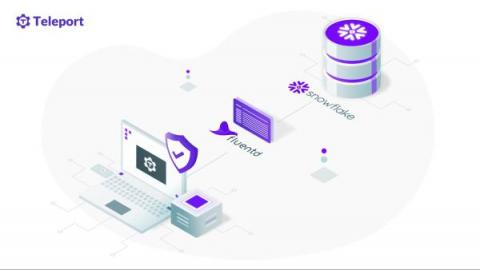
Securely Managing Your Audit Logs with Teleport and Snowflake

One of the most important features Teleport has to offer is that it centralizes all of your infrastructure’s audit logging into one central place, mapping every query, every command and every session to an individual user's identity. As you hire more engineers and resources scale, it can become increasingly difficult to manage all of this log data. Luckily Teleport’s extensibility makes this log data extremely easy to format, export and monitor all in a secure, event-driven way.

Why Building a Modern AppSec Program is Vital for Digital Business

This is the first of a six-part blog series that highlights findings from a new Mend white paper, Five Principles of Modern Application Security Programs. Be sure to look out for our upcoming blogs on each of the five principles. The COVID-19 pandemic accelerated the digitalization plans for global organizations by three years, while the adoption rate for digitized products and services increased by seven years.

Combat Ransomware with Zero Trust Data Security

Can’t see the forest through the trees. Can’t tell the ransomware from the apps. Can’t contain the malware if you can only see parts of the network. Ransomware hackers have several different tools in their toolbelt to gain access to a computer and then a network. Common exploits include email phishing campaigns, remote desktop protocol (RDP) vulnerabilities, and software vulnerabilities.

Unifying Construction Documents with Procore and Egnyte

It is not uncommon on the job site to find project teams using a variety of disparate applications to access, share and collaborate on documents - each with their own storage, permissions and controls. This makes it very challenging to manage that project information, as it flows in and out of teams, and across different software platforms.

A Guide to Open Source Intelligence (OSINT)

Open-source intelligence (OSINT) is essentially any information that can be obtained from publicly available sources. The practice of collecting this information is not new; in fact, in the early 1990s, the Deputy Director of the CIA asserted that over 80% of CIA analysis came from open-source information. Maps, phone books, printed materials, news reports, and other forms of content can provide a lot of information if one knows where and how to look.

Why telemetry storage matters for cybersecurity organizations

Telemetry storage is vital to cybersecurity firms for security as well as for operational reasons. It also represents a significant cost which is why LimaCharlie offers a full year of free telemetry storage to our users. LimaCharlie also enables organizations to route their data at the event level which means they can drastically reduce storage costs by only sending relevant data to high-cost security tools like Splunk, Elastic, Sumo Logic, or other SIEM and data analytics solutions.