Data Encryption Methods & Types: Beginner's Guide To Encryption

Data encryption is one of the many ways organizations can protect their data. Encryption turns plaintext (readable data) into ciphertext (randomized data), which requires the use of a unique cryptographic key for interpretation. In other words, encryption is a security measure used to scramble data so that it can only be read by authorized personnel.

Fuzzing Java Applications With CI Fuzz | Gradle

In this tutorial, I will show you how to set up and run a fuzz test on a Java application, with the CI Fuzz CLI using the Gradle integration. The CI Fuzz CLI is an easy-to-use fuzzing tool, that enables you to integrate and run fuzz tests directly from your command line. I chose this tool for this tutorial, on how to set up a fuzz test, as it is particularly user-friendly, and as it allows developers to set up and run a fuzz test with only three commands.

Defining Autonomous SOC: How Tomorrow's SOC will Augment Analysts

It’s an ever-changing and ever-evolving threat landscape out there today. Bad actors are smarter, more sophisticated, and better at evading detection. Security teams are also facing a barrage of overwhelming information, continually expanding the stream of alerts that must be reviewed, triaged and investigated.

Fuzzing Java Applications With CI Fuzz | Maven

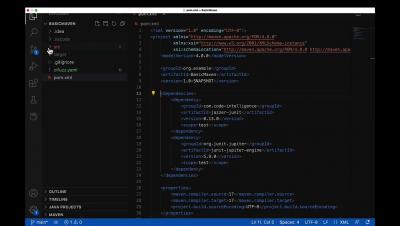
In this tutorial, I will show you how to set up and run a fuzz test on a Java application, with the CI Fuzz CLI using the Maven integration. The CI Fuzz CLI is an easy-to-use fuzzing tool, that enables you to integrate and run fuzz tests directly from your command line. I chose this tool for this tutorial, on how to set up a fuzz test, as it is particularly user-friendly, and as it allows developers to set up and run a fuzz test with only three commands.

Devo Enters a Strategic Collaboration Agreement with Amazon Web Services: What It Is and How It Benefits Customers

Devo recently announced that it has entered into a strategic collaboration agreement with Amazon Web Services (AWS). This is a significant milestone for Devo and great news for our mutual customers with AWS. We caught up with Tony Le, cloud partnerships director, to take a deeper dive into what this means and how the collaboration will benefit our users in the long run.

Extortion in Cloud Storage

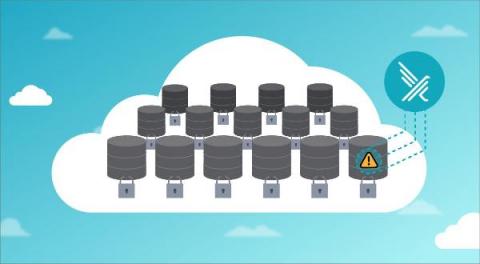
Extortion can simply be defined as “the practice of obtaining benefit through coercion.“ Data and cloud extortion schemes occur when precious data and/or access is stolen by an attacker that promises to restore it through payment or other demands. In this article, we’ll cover some common or uncommon extortion schemes, and highlight ways to detect and avoid falling prey to demands.

The Real Causes of the Rapid Cyber Insurance Rate Increase

Cyber insurance is a necessity in today’s cybersecurity landscape, especially in the wake of widespread ransomware attacks on commercial businesses of all sizes. A cyber insurance policy enables companies to transfer the cost of recovering from cyber incidents. In the event of a data breach, your cyber insurance policy can cover the costs of damages to others, profits lost if your network goes down, and the cost of negotiating ransomware.

Analyze security logs from Amazon Security Lake with Datadog

Amazon Security Lake allows customers to build security data lakes from integrated cloud and on-premises data sources as well as from their private applications. Directing your security telemetry into a unified data lake makes it easier to manage, analyze, and route security-log and event data to third-party SIEM solutions that leverage that telemetry.

How to Migrate Snyk to the new Bitbucket Cloud App Integration

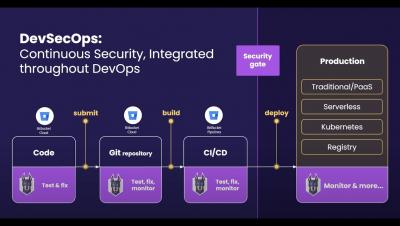
Snyk has a new and improved Bitbucket Cloud App. The new Snyk Security for Bitbucket Cloud App features the same Bitbucket experience with a streamlined onboarding process and improved enterprise functionality. Here's how to migrate your existing Snyk as Bitbucket Cloud App (Legacy)—to the new Bitbucket Cloud App integration.

The Essential guide to Google Drive Data Loss Prevention (DLP)

Google Drive is an integral part of Google Workspace (formerly known as G Suite). With over 6 million customers and over 2 billion monthly active users, Google’s platform is the world’s largest collaboration tool for companies both large and small. In Google Drive, employees across the world create, edit, and share files on a daily basis. This, however, does not occur without the risk of data leakage.