The Explainer: Five Things To Know About Data Tokenization

Tokenization hides data. Sometimes data must be hidden in order to satisfy compliance requirements and customers’ expectations for data privacy. A form of data protection, tokenization conceals sensitive data elements so should an organization’s data be breached, the visible tokenized data—essentially a replacement for the valuable data—means nothing.A hacker will only see characters that are meaningless.

5 Vulnerability Shifts You Need to Know for 2023

Since 2017, an upwards trend of vulnerabilities has been observed, reported to, and analyzed by the National Institute of Standards and Technology (NIST). According to the National Vulnerability Database (NVD), there were more than 25,200 vulnerabilities published in 2022, making it another record-breaking year, with an increase of 25% compared to 2021. That’s a five-time increase over the past decade.

They're Not Just Long Words: Anonymization And Pseudonymization Protect Data-driven Business

Spelling, let alone pronouncing, “anonymization” and “pseudonymization” is just the beginning. Vocabulary, however, will be the least of the challenges for organizations that ignore the business value created through the use of these data protection methods. Anonymization and pseudonymization are two ways to de-identify sensitive data, and each has a distinct purpose in the tightrope balance between fully using and fully protecting data and data privacy.

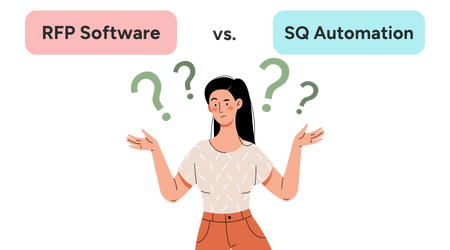
RFP Software vs. Security Questionnaire Automation

RFPs and security questionnaires make the world of sales and procurement go round. They’re both vital tools to help buyers assess potential relationships with vendors and ensure proper criteria are met before entering into any binding contracts. And while they serve an important role in the sales process, the burden they put on buyers and vendors alike has led to the creation of tools to streamline the process for all involved. Can you use a one-size-fits-all solution?

Unlocking the power of AI and Natural Learning

In Calligo’s latest Beyond Data podcast, co-hosts Sophie Chase Borthwick and Tessa Jones are joined by Alexander Visheratin, Artificial Intelligence Engineer at Beehive AI. Here we explore some of the episode’s highlights; the importance of Natural Learning Processing (NLP) and the pros and cons of output produced by examples like OpenAI’s ChatGPT-3.

How Automated Identity Management Can Help Solve the Compliance Puzzle

Have you ever received a puzzle as a gift from a well-intentioned friend? They likely thought something along the lines of, “Hey, this person’s into solving problems — I bet they’d love putting together this bad boy on a rainy day.” The sentiment was spot-on. Puzzles are your thing.

Breaking into Cybersecurity: A Military Veteran's Journey

Getting into cybersecurity can seem daunting, but for military veterans, it's a natural transition. In this video, we follow one veteran's journey as they use their resettlement money to fast-track their career in cybersecurity. From getting the basics with certifications like CompTIA Security Plus and Network Plus to eventually obtaining their CISSP, watch as they navigate the world of cyber security and share their insights and surprises along the way.