SOAR is Dead. Here's What Replaces It in 2026.

When SOAR emerged around 2015, it was trying to solve a real problem: SOC analysts were drowning in manual, repetitive tasks across disconnected tools. SOAR promised to connect those tools, automate the workflows between them, and give analysts their time back. For a while, it mostly delivered. That era is long dead.

The CEO Who Handled a Cyber Crisis Perfectly

A banking incident early in one career showed what good leadership looks like, with senior executives handing over a credit card, arranging food, hotel rooms and proper shift rotations. Instead of demanding updates every five minutes, leadership shielded the team from pressure, supported rest cycles and focused on helping the business survive. ⸻ For more information about us or if you have any questions you would like us to discuss email podcast@razorthorn.com. We give our clients a personalised, integrated approach to information security, driven by our belief in quality and discretion..

From alerts to entities: Transforming the SOC with Corelight Agentic Triage

The cybersecurity landscape has fundamentally shifted in the last several years. Adversaries are no longer just using AI to draft phishing emails; they're deploying autonomous AI agents capable of executing end-to-end attack chains, from initial reconnaissance through lateral movement and data exfiltration. Anthropic's1 analysis of recent incidents indicates a rapid acceleration in attacker adoption of agentic workflows, dramatically shortening the time between initial access and impact.

Survive the AI Code Blizzard: Introducing Snippet Detection

In 2026, software development speed is an AI-solved problem. Yet, as AI-generated code volumes surge, organizations face a new kind of risk visibility gap. Developers are increasingly copying third-party snippets into their codebases—from both AI prompts and open-source software components—creating large security and compliance blind spots that lead to significant risks.

The Unsung AI Hero: Data Normalization

AI agents are only as effective as the data they consume. In this post, we explore the unsung hero of the security stack: data normalization. This process serves as the deterministic guardrail that makes AI grounding possible. Without a structured data foundation, grounding is only as good as the often chaotic data being retrieved, leading to confident but incorrect AI responses.

CIFS vs SMB File Share Protocols: The Differences Explained

When it comes to selecting a protocol to share files over the network, you commonly come across the SMB and CIFS terms in software interfaces and documentation. Some users think that SMB and CIFS are the same thing, and clearly identifying the difference may be difficult. However, let’s look at why CIFS can’t be used as a synonym for SMB. Learn about the SMB vs CIFS protocols differences and how to use the terms.

Why Everyone Must Learn AI Skills in 2026 #shorts #ai

AI skills are no longer optional. The US Department of Labor recently released an AI Literacy Framework, making AI knowledge a basic workforce skill for the future. This means every worker should understand: Basic AI principles AI use cases Prompting AI correctly Evaluating AI outputs Using AI responsibly AI literacy is quickly becoming a core job skill across all industries, not just tech.

Everyone Is Deploying AI Agents. Almost Nobody Knows What They're Doing.

One constant I hear from CISOs I speak with is that AI agents are not coming. They are already inside organizations, reasoning through goals, selecting tools, and taking action through the same APIs that connect your most sensitive systems. And most security teams have no idea what those agents are doing.

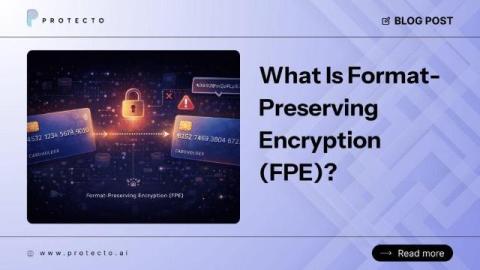
What Is Format-Preserving Encryption (FPE)?

Your database stores a credit card number: 4532 1234 5678 9010. You encrypt it for security. Now it looks like this: %Xk92@!mQz#Lp&7. Problem. Your payment system can’t process that. It expects a 16-digit number. Your billing software breaks. Your downstream analytics fail. Your whole pipeline comes to a halt. This is the exact problem that format-preserving encryption was built to solve.