Why Your AI Workflow Should Never Depend on a Single Model

Network engineers have long understood redundancy. Redundant power, redundant links, redundant clusters. The reasoning is simple: any single component that can fail, will. But AI introduces a category of failure that most infrastructure teams have not yet built defenses against. Unlike hardware, AI models can become unavailable for reasons entirely outside your organization's control.

Scammers Abuse Calendar Invites to Plant Phony Subscription Notices

Malwarebytes warns that a phishing campaign is using Google Calendar invites to send phony renewal notices for Malwarebytes subscriptions. The calendar invites contain a phone number that will connect the user with a scammer. “The amounts in these fake invites are large and attention-grabbing, usually several hundred dollars for multiple years of service,” Malwarebytes says.

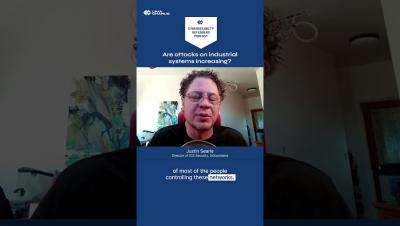
Are attacks on industrial systems increasing? #cybersecurity #podcast #OT

Public awareness of industrial system attacks is finally catching up to what security professionals have known for years. On The Cybersecurity Defenders Podcast, Justin Searle, Director of ICS Security at InGuardians, traces the shift from Conficker in 2008 taking out OT systems on flat networks to Stuxnet in 2010 making the warfare implications clear. Since then, awareness among governments and critical infrastructure operators has grown steadily, and so have the attacks.

The AI SOC explained: Intelligent security for modern threats

The SOC was originally designed for a threat landscape that no longer exists. Today, the sheer number and speed of modern threats make it tough for even the best analysts to keep up. Manually sorting through huge amounts of data, dealing with alert fatigue, and relying on fixed rules make it harder to understand the full story behind each threat. The AI SOC addresses this problem, but not in the way most vendors describe. It’s not just a simple product or feature.

What Happens When Healthcare Systems Go Dark

• What happens inside a healthcare system when ransomware takes down Active Directory and authentication fails? In this episode, Josh Howell sits down with Nelson, Executive Healthcare Strategist at CDW, to explore real-world cyber incidents and the architectural shifts required to recover safely. You’ll learn: YouTube Chapters Final Lessons for Healthcare Leaders If you enjoyed this episode, be sure to subscribe to our YouTube channel.

The Hidden Costs Of Not Using Cloud Technology

Business owners often stick to familiar routines - even when those habits drain the company bank account. Holding onto physical servers feels safe until the hidden bills for maintenance and repairs start piling up. These expenses act like a slow leak in your budget - slowly draining resources that could go toward growth. Many leaders overlook the subtle drains on their budget when they avoid modern systems. Shifting away from physical setups reveals expenses that were hiding in plain sight for years. Taking the step toward better systems is the only way to protect your long-term profits.

Simple Ways to Investigate a Website's Background and Ownership

You'll surely agree that the whole world's now digital, and almost every business now depends on a website to present services, sell products, share information, or attract customers. A website now stands as the first point of contact for buyers, clients, partners, researchers, and general users. For instance, approximately 2.77 billion people shop online globally, which clearly shows how common online buying has become worldwide.

The NotPetya attack: What it teaches us about cyber survival

In June 2017, the world witnessed one of the most destructive cyberattacks in history: the NotPetya attack. Unlike traditional ransomware, NotPetya was a wiper. Once it infected a system, recovery was impossible. The ransom demand was a ruse because no decryption keys were ever made available. The true intent of the attackers was to cause disruption and damage. Nearly a decade later, NotPetya is considered a turning point in how organizations approach backup and recovery. The threat has only grown.