
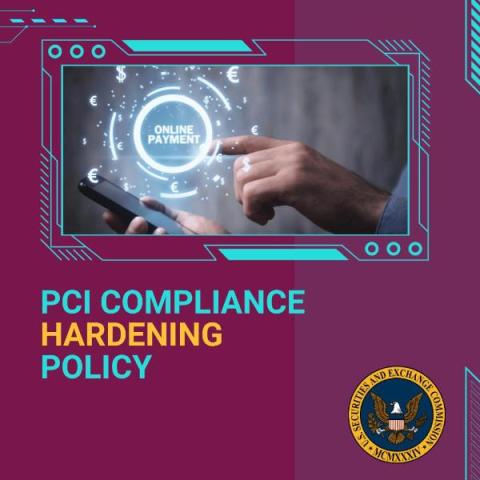
PCI DSS Compliance Hardening Policy
Server configuration hardening is a basic requirement for compliance with Payment Card Industry Data Security Standard (PCI DSS) v4.0 that was updated in April 2022 from PCI DSS Version 3.2.1. Server hardening is a fundamental process that ensures the security of servers in the network by reducing the servers attack surface through implementation of secure configurations.

This Month in Datadog: Heatmaps Updates, API Catalog, Content Packs for Cloud SIEM, and more
Datadog is constantly elevating the approach to cloud monitoring and security. This Month in Datadog updates you on our newest product features, announcements, resources, and events. This month, we put the Spotlight on a pair of Heatmaps updates..

Is retail a security fail? Make sure your PoS is not a POS
Whether it's a brick-and-mortar storefront or an e-commerce platform, no player in the retail space is safe from cyberattacks. Over the past decade, we have seen major breaches of big-name stores, resulting in multi-million dollar settlements and hundreds of millions of affected users. But what exactly is going on here? We will examine the mechanisms cybercriminals use to exploit retail stores and platforms, what they look for, and, most importantly, what can be done to thwart threats and leave cyber criminals on the shelf.
Protecting Users from Malicious Sites with Falcon for Mobile
Today, mobile devices are ubiquitous within enterprise environments. But with their proliferation, it provides adversaries with yet another attack surface with which they can target users and cause a breach. From phishing attacks to malicious apps, mobile users tend to let their guard down and potentially click on obfuscated links to malicious sites. Falcon for Mobile protects users by preventing connections to malicious sites on both iOS and Android devices.

Strengthening Security: The Power of Multiple Layers Against Advanced Threats
It's no secret that news of cyberattacks and data breaches that cause significant damage are becoming increasingly frequent in cybersecurity. Malicious actors are also constantly coming up with new threats, such as zero day attacks that are designed to avoid detection and bypass traditional security measures. It's crucial to take a comprehensive and global stance on this issue, rather than relying on a single security layer.

Industrial Control Systems are Exposed: Breaking Down the Risks
The world had a security wake-up call recently. Organizations were alerted to nearly 100,000 exposed industrial control systems (ICS), potentially allowing an attacker to access and control physical infrastructure such as power grids, traffic light systems, security and water systems, and more. That’s not only a stark statistic but a critical call-to-action for organizations around the world.
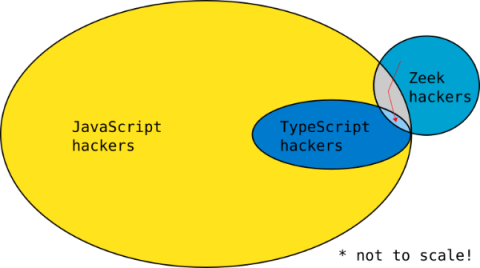
Writing a Zeek package in TypeScript with ZeekJS
Zeek® is the world’s most widely used network security monitoring platform and is the foundation for Corelight network evidence. In this blog I share how to write a Zeek package in TypeScript with a new capability called ZeekJS that was released as part of Zeek 6.0.

Ensuring robust security of a containerized environment
In today’s rapidly evolving digital landscape, containerized microservices have become the lifeblood of application development and deployment. Resembling miniature virtual machines, these entities enable efficient code execution in any environment, be it an on-premises server, a public cloud, or even a laptop. This paradigm eliminates the criteria of platform compatibility and library dependency from the DevOps equation.