How Should Sensitive Information Be Stored?

When we think about storing sensitive information, two types of information come to mind: digital data and physical data. While physical data can be securely stored in a physical vault, digital data should be stored in an encrypted cloud storage solution to protect it from common cyber threats. Continue reading to learn the best ways to store your sensitive physical and digital information, plus the storage methods to avoid.

SenseOn achieves 99% protection rate and 0 false positives in the latest AV-Comparatives Real-World Protection Test

SenseOn achieves 99% protection rate and 0 false positives in the latest AV-Comparatives Real-World Protection Test False positive alerts in security operations pose a significant risk by diverting critical resources and attention away from genuine threats. These incorrect alarms, which signal threats where none exist, can lead to wasted time, reduced efficiency, and increased costs as security teams investigate and address these non-issues.

Dani Grant (Jam.dev) | Fixing Bugs, Building a Company, and the Future of the Web

Dani Grant, co-founder of Jam.dev, talks about her company, how they are trying to fix the bug process for developers, and also discusses how Jam.dev uses Cloudflare. We also go over what a better internet for the future looks like, and the challenges and opportunities in the AI era.

FBI Warns of AI-Assisted Phishing Campaigns

The US Federal Bureau of Investigation’s (FBI’s) San Francisco division warns that threat actors are increasingly using AI tools to improve their social engineering attacks. “AI provides augmented and enhanced capabilities to schemes that attackers already use and increases cyber-attack speed, scale, and automation,” the FBI says.

Navigating BYOD Security: Proven Strategies and Best Practices for Success

The era of working from a single device, at a single desk, in a single office is over. Thanks to portable electronics and wireless internet connections, employees can work from just about anywhere. If they don’t have an authorized work machine handy, they’ll use their personal devices instead. Bring-your-own-device (BYOD) is now a common practice, which makes BYOD security more important than ever.

Phishing and Pretexting Dominate Social Engineering-Related Data Breaches

New data shows that despite the massive evolution of the cybercrime economy, threat actors are sticking with the basics in social engineering attacks, with a goal at stealing data. I probably could have called this purely based on all the articles I’ve written (and all the articles I’ve read that never made it here). But when it comes to protecting your organization from social engineering, stick to the basics.

Part 1: How Egnyte Built its Turnkey Retrieval Augmented Generation Solution

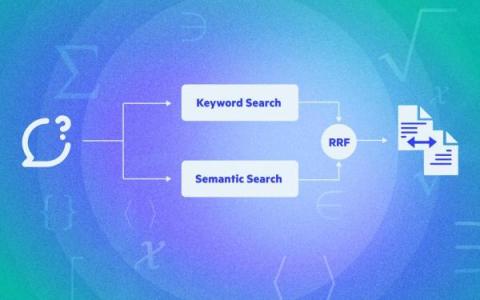
The Egnyte platform houses a lot of data. To enable users to make the most of this asset, we need to help them efficiently retrieve information. Traditional search interfaces do a decent job of retrieving information directly related to query keywords, often presenting results in a list format without additional interpretation or synthesis.