Who's Responsible for Your Security?

Antivirus, malware protection, email security, EDR, XDR, next-generation firewalls, AI-enabled analytics – the list of protective controls and vendors appears to go on forever. Each day, bad actors discover new attack vectors that provide them with new roads to create chaos and destruction. News of data leaks, breaches and exposures has reached the point where it leaves most people numb and apathetic.

Managed security service providers should stay skeptical

It wasn’t too many years ago that only large-scale organizations and enterprises were compelled to worry about cybersecurity. They were the primary targets for malicious actors, and so they seemed to be the only ones thinking about defense. But just like most things, that has completely changed. Small and medium-sized businesses are just as vulnerable to cyberattacks. Without the size and resources to bring security in-house, most turn to managed security service providers (MSSPs) for help.

Introducing Landscape Mode, Passphrases and Other Improvements to KeeperFill

Introducing Landscape Mode, Passphrases and Other Improvements to KeeperFill Intro KeeperFill is Keeper’s powerful, autofilling feature that works across all devices, allowing you to automatically and securely fill your usernames, passwords, passkeys, 2FA codes and more into the sites you visit.

Every transaction tells a story: Protecting HPE NonStop ecosystems against AI-driven cyber threats

In a world where digital transformation is accelerating, the stakes for safeguarding critical infrastructure, government systems, and financial services have never been higher. These sectors are increasingly targeted by sophisticated payment fraud schemes and AI-powered cyberattacks, leaving them under immense pressure to shield their customers from threats.

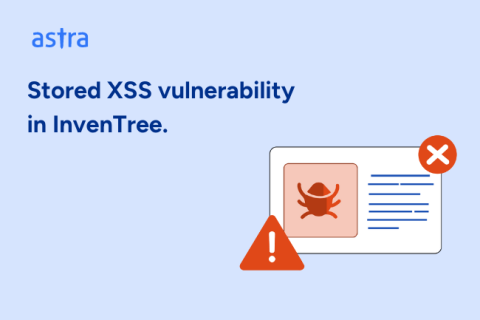
CVE-2024-47610: Stored XSS Vulnerability in InvenTree

Astra Security identified a vulnerability in the InvenTree Inventory Management System on October 2nd, 2024, which has since been patched. This vulnerability, CVE-2024-47610, is stored cross-site scripting (stored XSS) that targets versions of InvenTree below 0.16.5, where ‘Markdown,’ in the Notes feature, can enable attackers to run code. Cross-site scripting vulnerabilities allow a hacker to inject HTML code into an application and affect the users who intercept the code.

How to Rename Files in PowerShell with Rename-Item

The Rename-Item cmdlet in PowerShell can be used to change the name of an item. This item can be a file, directory, or any object in a path. The cmdlet can also be used to rename items both locally and in a network environment. Users can also perform batch renaming operations, integrate renaming tasks into scripts for automation, and even manage complex renaming requirements with the help of wildcard characters and regular expressions.