Beyond Compliance: Building a Resilient Security Strategy with the ISM and Essential Eight

In today’s complex cybersecurity landscape, addressing the controls within the Australian Government’s Information Security Manual (ISM) and the Essential Eight (E8) is critical when seeking to build rapport and work with the Australian Government. Australian cybersecurity regulations like the ISM and E8 outline foundational steps, including cybersecurity best practices and controls for data protection strategies.
FedRAMP Certification and Data Security

Federal Risk and Authorization Management Program (FedRAMP) and State Risk and Authorization Management Program (StateRAMP) are pivotal frameworks for securing cloud services used by federal and state governments, respectively. These programs mandate stringent security protocols, emphasizing the need for organizations to manage and disclose third-party involvement in delivering software services to the government.

Navigating the SEC Cyber Regulations and 8K reporting for smaller entities

On June 15, 2024, half a year after the SEC's cybersecurity regulations were enacted, smaller organizations—those with a public float under $250 million or annual revenue under $100 million—were finally subject to report material cyber events on Form 8-K, Line 1.05. However, as the larger entities have already demonstrated, determining materiality can be complex, requiring stakeholders to consider financial loss, compromised data records, operational impacts, and more.

Top 9 Log Analysis Tools

Logs tell the hidden story of your IT infrastructure – what’s working, what’s breaking, and what could be under attack. You’re left sifting through a chaotic stream of events, risking missed insights crucial for maintaining security and operational stability. And the stakes couldn’t be higher. The average global data breach cost hit $4.45 million, with U.S. companies facing an even steeper $9.48 million per incident.

OpenShift Disaster Recovery: Ensuring Business Continuity

What happens if your critical OpenShift applications suddenly crash due to a major system failure or cyber attack? How fast could you bounce back and get things running again? Having a solid OpenShift disaster recovery plan isn’t just a nice-to-have — it’s essential for keeping your business going when the unexpected hits. This guide walks you through the key elements of building a strong disaster recovery setup for your OpenShift environment.

Security Service Edge (SSE): The Ultimate Guide to Enhancing Data Protection

Mobile devices, remote access, cloud-based applications — the security perimeter as we once knew it has disappeared. The proliferation of cloud-native infrastructure has given organizations and their employees more immediate access to their work than ever before. But this convenience cannot come at the cost of security, as malicious actors look for new ways to exploit an ever-increasing number of access points.

Office Hours with Dr. Jack Freund With special guest, Or Amir, Product Manager at Kovrr

* Explore some of the top use cases for which our on-demand CRQ platform is utilized, walking through the specific features and how to leverage them for each of the use cases. These use cases include high-level communication and board reporting, insurance optimization, budgeting, and additional resource justification.

The InfoSec Guide to Dark Web Monitoring

Your customers’ stolen data could be for sale right now – and you might not even know it. The dark web is a thriving, shadowy marketplace where fraudsters trade credit card numbers, account details, session cookies, and even entire identities. On average, there were more than 2.5 million daily visitors to the dark web in 2023, showcasing the scale of this underground economy.

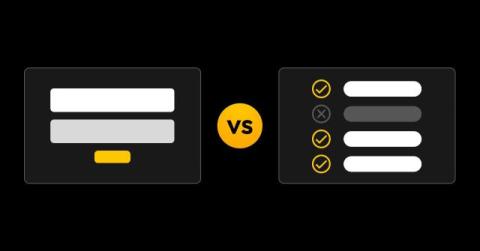
SAML vs. OAuth: What's the Difference?

The main difference between Security Assertion Markup Language (SAML) and Open Authorization (OAuth) lies in their roles: SAML focuses on authentication, while OAuth is dedicated to authorization. Despite their differences, both SAML and OAuth are necessary for improving your organization’s overall security, allowing authorized users to verify their identities and access appropriate resources.