Staying One Step Ahead: The Value of an Early-Year Cybersecurity Checkup

Staying One Step Ahead: The Value of an Early-Year Cybersecurity Checkup. It’s a new year, which means fresh goals and renewed energy. Why not channel some of that momentum into your cybersecurity strategy? While plenty of businesses wait until mid-year to run their reviews, getting a head start now can help you stay ahead of ever-evolving threats. Here’s why an early-year cybersecurity checkup is a game-changer—and how to make the most of it.
Why GenAI Should Be a Deciding Factor With Email Security Investments

The good news is that advanced email protection methods do not necessarily call for a trade-off. Generative AI (GenAI) is both a way to embrace innovation and an enabler of robust defense mechanisms to take action against dangers that are increasingly difficult to counter. Investing in this technology at any stage of your email security program can make your organization adaptive, future-focused, and fully prepared to mitigate the risks posed by cybercriminals leveraging AI tools for malicious purposes.

DORA Compliance: Checklist for 2025

Financial organizations across Europe are actively preparing for the Digital Operational Resilience Act (DORA), taking effect in January 2025. Meeting DORA compliance requirements has become essential for financial institutions as they adjust their operations to match new regulatory standards. The legislation brings substantial changes to information and communication technology (ICT) risk management practices, security protocols, and third-party oversight.

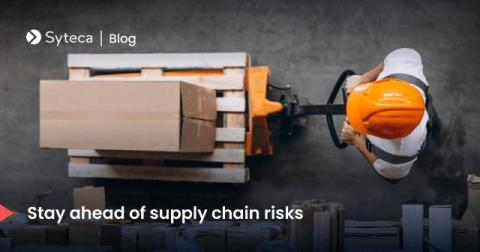
Major Supply Chain Cybersecurity Concerns and 7 Best Practices to Address Them

In today’s interconnected world, supply chains are essential for nearly every product and service. Yet, this interconnectedness comes with vulnerabilities. In fact, 41% of organizations that suffered material impacts from a cyberattack in 2023 report that those cyberattacks originated from a third party, according to the 2024 Global Cybersecurity Outlook by the World Economic Forum. What supply chain security issues might your organization face?

Securely bringing your own AI to Tines

At Tines, we take pride in both the flexibility and security of our platform: it’s what allows us to do things like safely connect to any HTTP API in the world, and seamlessly deploy in fully air-gapped environments. Similarly, our AI capabilities have been designed from the ground up to be secure and private, with no logging, internet transit, or training on your data.

SOAR into 2025: SOAR's evolving role in security and beyond

Security Orchestration, Automation, and Response (SOAR) is rapidly evolving to meet the demands of modern security teams. As organizations face increasing threats and complexity, choosing the right SOAR solution has never been more critical. Join Matt Muller, Field CISO at Tines, and Andrew Green, Networking & Security Research Analyst at GigaOm, for an in-depth discussion on the state of the SOAR market and what’s next for security automation.

Mend Renovate Enterprise Cloud: Dependency Updates at Scale

If there’s one thing development and security teams can agree on, it’s that updating dependencies is a worthwhile endeavor. Keeping open-source dependencies up to date reduces bugs—both now and in the long run. And whether those bugs are security vulnerabilities or functional issues, everyone is happy to see them go.

Future-gazing: How API Security Will Evolve in 2025

Who doesn’t love a little glimpse into the future? For cybersecurity—and more specifically, API security - gazing into the magic crystal ball may not strictly be necessary. But there are definite trends that will evolve for 2025 and make API security even more of an imperative for modern businesses. Here are our top five.

Mitel MiCollab Vulnerabilities: CVE-2024-35286 and CVE-2024-41713

Mitel’s MiCollab Unified Communications solutions are widely used by businesses to streamline communications. However, two critical vulnerabilities, CVE-2024-35286 and CVE-2024-41713, have been identified across several versions of Mitel MiCollab. CVE-2024-35286 has been identified in versions 9.8.0.33 and earlier and CVE-2024-41713 has been identified in versions 9.8 SP1 FP2 (9.8.1.201) and earlier.