Hospitality Under Attack: New Trustwave Report Highlights Cybersecurity Challenges in 2025

As the summer travel season approaches, travelers worldwide are busy booking their holidays, entrusting the hospitality industry with some of their most sensitive personal and financial information. Unfortunately, this makes the sector a prime target for threat actors looking to exploit and steal this data. To help organizations in the hospitality sector address these risks, Trustwave SpiderLabs has released the 2025 Trustwave Risk Radar Report: Hospitality Sector.


Hunting Malware with MSHTA and CyberChef: A Deep Dive into Obfuscation in Malicious Scripts and Credential Theft

Recently, our team came across an alert involving mshta.exe, a native Windows tool that attackers commonly exploit for malicious purposes. MSHTA (Microsoft HTML Application Host) is a well-known LOLBin (Living-Off-The-Land Binary). This means it is a legitimate system tool that can be abused and can blend in with normal activity. MSHTA can execute remote HTML applications or JavaScript content directly from a URL.

Simplifying the shared responsibility model: How to meet your cloud security obligations

The shared responsibility model, introduced by AWS in 2011, defines the division of cloud security responsibilities between cloud providers and customers. Cloud providers are responsible for securing their physical infrastructure, while customers are responsible for securing their own data, configurations, and access. Cloud environments have grown and become much more complex since 2011.

One Year of LevelBlue: Milestones, Momentum, and a Vision for the Future

This month marks an exciting milestone – LevelBlue’s first anniversary. One year ago, we launched with a clear mission: to simplify cybersecurity and help organizations achieve meaningful, outcome-driven security in an increasingly complex threat landscape. Now, a year in, I’m incredibly proud of how far we’ve come.

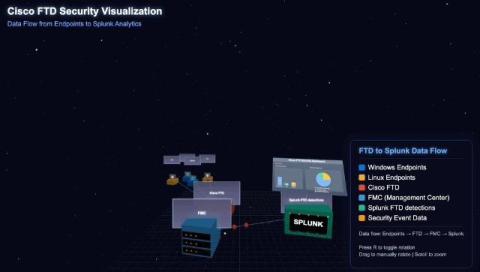
Securing the Network Edge: Cisco Secure Firewall Threat Defense Detections for Splunk

By integrating Cisco’s Firepower Threat Defense (FTD) with Splunk’s analytics platform, your security team immediately gains comprehensive, organization-wide visibility into network threats far beyond what any single firewall can detect alone. Yet, despite the critical need to bridge network and security data, many organizations still deploy perimeter defenses like Cisco's FTD but struggle to convert its rich telemetry into actionable insights useful to a SOC.

How VRM Determines Runtime Security Flaws

Modern application environments are increasingly complex, combining containers, microservices, CI/CD pipelines, and ephemeral compute. While Static Application Security Testing (SAST) and Software Composition Analysis (SCA) can uncover vulnerabilities during build time, they often leave a critical gap: runtime security flaw detection and determining whether a detected flaw is actually exploitable and running in production.

Storm-0558 and the Dangers of Cross-Tenant Token Forgery

Modern cloud ecosystems often place a single identity provider in charge of handling logins and tokens for a wide range of customers. This approach certainly streamlines single sign-on (SSO) for end users, but it also places enormous trust in a single set of signing keys. If those private keys are compromised, attackers can create tokens that appear valid to any service that relies on them.

Trustwave SpiderLabs Report Highlights Ransomware and Dark Web Dangers for the Hospitality Sector

The summer travel season is almost here, and travelers worldwide are in the process of booking their holidays, thus placing some of their most vital personal and financial information into the hands of the hospitality industry. A fact not lost to threat actors who thrive on gaining access and stealing this data.

Addressing Security Concerns in the Development of Mental Health Applications

In the digital age, mental health applications have become vital tools for providing support, therapy, and resources to millions of users worldwide. However, the sensitive nature of mental health data demands an uncompromising focus on security. Users entrust these apps with highly personal information, making it crucial for developers to implement robust protections. This article explores the security concerns inherent in mental health app development and outlines best practices for safeguarding user data.