Announcing Secure Data Exchange for Agentic AI

PwC recently did an AI agent survey where they found the following: This all sounds great, right? For many reasons it is, but agentic AI creates a challenge of visibility for organizations into how AI agents are communicating with each other and external third-party vendors. Imagine a multitude of AI agents autonomously exchanging data across a complex mesh of third-party vendors and applications.
Beyond Anomalies: How Autonomous Threat Hunting Uncovers the Full Attack Story

APIs are essential in today's digital landscape, supporting everything from mobile apps to vital backend systems. As their importance grows, they also become attractive targets for advanced attackers who bypass traditional security methods. These adversaries do not simply exploit API flaws; instead, they mimic normal user behavior to launch subtle, slow-and-low attacks that are difficult for conventional tools to detect.

Employee Monitoring in Financial Services: Safeguarding Data and Reducing Insider Risks

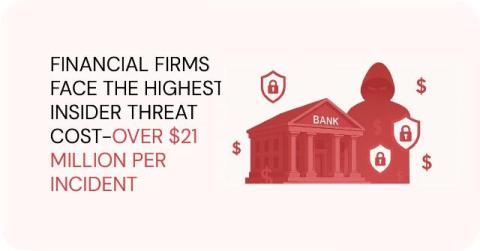
Financial institutions sit at the core of the global economy and are at the top of the list for insider threat actors. Whether it’s a rogue employee leaking customer information or a third-party contractor with unchecked access, insider incidents in the financial sector can be devastating. As a result, employee monitoring in financial services has become an essential strategy for reducing risk and maintaining oversight in high-stakes environments.

Understanding DocumentDB's Network Security Trade-Offs: The VPC Challenge

AWS DocumentDB by default is securely isolated within a VPC, unreachable from the public internet, what could be more secure? This security architecture can create unexpected challenges and complexity. The root cause? The very VPC isolation designed to protect DocumentDB can introduce a complex web of networking requirements, operational considerations, and architectural decisions that require careful management to maintain security.

Is VISS the Right Fit for Production Vulnerability Management?

Tech companies love a good framework, especially ones that promise structure, transparency, and alignment with internal standards. Zoom’s Vulnerability Impact Scoring System (VISS) is one of those. It’s designed to translate internal security policies into a scoring model that supports impact-based decision making, particularly for bug bounty programs and external disclosure workflows. On paper, that sounds useful. But in practice, it doesn’t scale.

How AI Makes APIs Even More Dangerous #apirisks #aisecurity #airisks #ai

AI and agent-based technologies are accelerating the use—and the risk—of APIs. Experts from Wallarm and Oracle explain how every new AI app or agent can instantly connect to dozens of APIs, multiplying your attack surface. Learn why the combination of AI and APIs is creating new security challenges you can't ignore.

Netacea Achieves SOC 2 Compliance for the Fifth Consecutive Year: Why It Matters

We’re proud to announce that Netacea has once again successfully completed our SOC 2 Type II audit, marking our fifth consecutive year achieving this important milestone in data security and trust. SOC 2 compliance isn’t a checkbox exercise. It’s a rigorous, independent validation of how seriously we take the responsibility of protecting customer data. For five years running, Netacea has demonstrated our commitment to operating securely, reliably, and transparently.

6 Best CASB Solutions for 2025: Cloud Access Security Broker Tools Compared

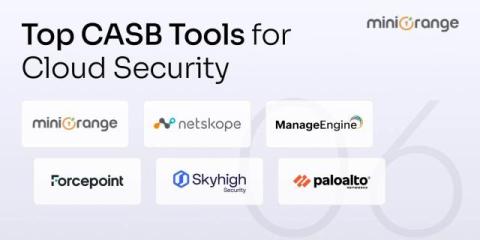
Searching for the best way to protect your cloud data, apps, and users in 2025? This guide compares the top CASB tools and their features and helps you choose the right cloud access security broker solution for your business.