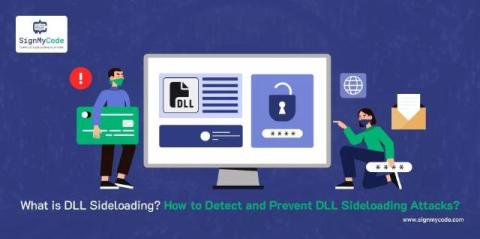
What is DLL Sideloading? How to Detect and Prevent DLL Sideloading Attacks?

You update your antivirus. You install that fancy EDR. You think you’re safe. But, surprise, Hackers are still getting in without triggering a single alarm. By hijacking trusted apps and making them load malicious code, voluntarily. This sneaky move is called DLL Sideloading, and it’s becoming the cybercriminal’s favourite backdoor. Sounds horrifying? It is. But here’s the good news for you. If you understand how DLL sideloading works, you can catch it before it wrecks your system.

Akira Ransomware Exploits SonicWall SMA100 Vulnerabilities: What You Need to Know

A newly surfaced set of vulnerabilities in the SonicWall SMA100 series appliances has captured the attention of cybersecurity professionals. While SonicWall has released patches for CVE-2025-40596 through CVE-2025-40599, and media reports point to a surge in Akira ransomware attacks targeting SonicWall SSL VPN infrastructure, CISA has not formally confirmed exploitation of these specific vulnerabilities by Akira at this time.

Inside the Mind of a Stealer Log Aggregator: An Interview with MoonCloud

In today’s threat landscape, the market for stealer logs—collections of credentials, browser data, and session cookies harvested through infostealers—continues to evolve. While many threat actors have come and gone, others have adapted and built significant operations around data resale, log aggregation, and credential-based exploitation. We spoke directly with MoonCloud, one of the more active stealer log aggregators operating in 2025.

Cut SOC Alert Fatigue with Smarter Detection Architecture

In many organisations, the security operations centre (SOC) is overwhelmed. The volume of alerts coming from tools like Sentinel, Defender for Endpoint, and Cloud Apps is high—and growing. Spending more time triaging noise than they are stopping real threats, does this sound familiar? This isn’t about analyst headcount or tool choice. It’s about architecture.

Kovrr's CRQ Dashboard Upgrade Unifies the Full Picture of Cyber Risk

‍ ‍With the continuously expanding influence that cybersecurity has in determining an organization's financial and operational resilience, cyber risk quantification (CRQ) has steadily become a foundational component of any robust cyber governance, risk, and compliance (GRC) program.

Agentic cloud security powered by Sysdig Sage

Introducing Agentic Cloud Security with Sysdig Sage. Cloud security doesn’t need more alerts — it needs better judgment. At Sysdig, we believe defenders shouldn’t have to choose between speed and certainty. They need a different kind of intelligence: AI that thinks AI that reasons AI that acts With the Sysdig Sage, the age of agentic cloud security has arrived. Sysdig Sage brings a security “brain” to your cloud—always on, always learning, always working.

New security capabilities for startups: Build enterprise-grade trust without compromising speed

As a startup, your early success and growth depend on earning buyer trust. But when you have limited levers to pull, like brand recognition, customer logos, and investor backing, proving trust often comes down to demonstrating a strong security posture. ‍ However, the bar for trust is rising—especially if you’re building with AI. Today’s discerning buyers expect more than a SOC 2 report.

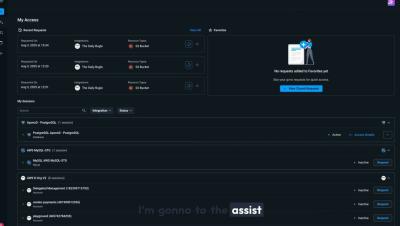
Apono's AIPowered Access Assistant - Faster, Easier Access Requests Ask ChatGPT

Here’s a streamlined version: Introducing Apono Access Assistant, our AI companion that speeds up access requests without sacrificing security. It handles three scenarios: mapping tasks to the right permissions, showing you what resources you can reach, and diagnosing permission errors. In this demo you’ll see it resolve an S3 access issue in seconds by creating a temporary read‑only role and revoking it when you’re done.

Cyber is loud, but not clear

Cyber teams are busy. Tools are deployed. Alerts are flowing. Dashboards light up with scores, heatmaps, and recommendations. But when I ask one simple question — “What does this mean for the business?” – I often get technical jargon or vague reassurances. That’s a problem. When cyber risk isn’t expressed in terms the business understands — continuity, customer trust, regulatory exposure, and revenue impact — it becomes abstract.