Security | Threat Detection | Cyberattacks | DevSecOps | Compliance

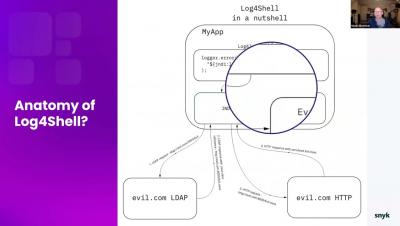
Log4Shell Live Hack: A Hands-on, Actionable Fix Guide

In this live hack webinar on the Log4Shell exploit we give a brief overview of the vulnerability and dive right into some examples of the exploit in action. We then show several real-world remediation approaches as well as other fixes outside of code. We feature a final round of fun demos, including container and IaC hacks and Java-based game hacks. We wrap up with a great list of takeaway resources and answer your questions.

Forward Fix: Minimize Downtime with ServiceNow Integration

Not enough detailed information in your ServiceNow ticket causing headaches and delays? Forward's ServiceNow integration can help you save time by automatically providing network data in incident tickets or automatically create tickets based on intent or reachability. Learn more at forwardnetworks.com/integrations

Securosis Webinar New Age Network Detection

New Age Network Detection: Keeping pace with the Evolution of Tech Infrastructure New approaches to network detection and response to address increasing attacker sophistication and cloud-based resources. How advances in analytics help organizations detect attacks in encrypted traffic and identify command and control traffic. The advantage of an open data approach is to integrate with existing detection capabilities.

XDR: The Importance of Network Technology

XDR is new to the marketplace, and there remains confusion about what it is - and is not. Alex Kirk of Corelight likes to dispel the myth that it's about endpoint security. "You've got to have the N," he says - network technology. In this interview, he dispels myths and expounds on possibilities. In this video interview with Information Security Media Group, Kirk discusses.

CISO Insider - S3E2 - Driving diversity in infosec with Lisa Hall

PagerDuty Head of Information Security Lisa Hall joins us on CISO Insider for an in-depth discussion on what diversity in the infosec industry really looks like — not just hiring to meet DEI quotas, but fostering differences to build strengths across the board. Diversity in thought and background among her staff is a success factor for Lisa’s team, and it leads to greater diversity in the work they do at PagerDuty.

Top 10 Uses of Website Vulnerability Scanner Tools

The average cost of data breaches in 2021 was USD 4.24 million, the highest figure in at least 17 years. So, proactive, accurate, and effective identification of security vulnerabilities is non-negotiable and offers a solid basis for adequate security. By proactively identifying these vulnerabilities, weaknesses, and flaws in the application, website vulnerability scanner tools bring accuracy and efficiency in web application security.

Pentest 101: Detect and Prevent Clickjacking with Penetration Testing

Clickjacking is an interface-based attack where the hacker manipulates the CSS of a website to insert a malicious iframe, button, or link which hides behind a seemingly harmless button of link. It takes the user to a malicious page and triggers some unsolicited action on the user's behalf. A clickjacking attack may be used to trigger a malware download, loss of content, or money, among other things. You can detect it with the help of penetration testing.

Insights from an MSP Partner | Matt Lee

Egnyte’s Director of MSP Community and Partner Enablement, Eric Anthony, catches up with Pax8’s Senior Director of Security and Compliance, Matt Lee, to talk about the advantages and benefits of Egnyte’s MSP program. In this video, Lee discusses some of his favorite features of Egnyte and how they help him keep his users secure. Egnyte is trusted by more than 16,000 content-critical businesses worldwide.

Securing telework 2020 and beyond

Teleworking isn’t just about your home desk: it’s about mobility, agility, and security. As public and private industries shift to telework, thanks to long-term innovation and short-term necessity, it’s clear that telework is here to stay. But to what scale? This webcast explored the concepts of security and mobility within the broader telework schema. How will personal devices and other technology tools accelerate the ease of telework? On the flip side, as attackers target devices, how can organizations protect personal devices from breaches?