Security | Threat Detection | Cyberattacks | DevSecOps | Compliance

Protecting Your Business from Web Scraping as a Service

Since the early days of the World Wide Web, automated scripts known as bots have been crawling cyberspace, collecting data for various purposes. Initially, these bots were designed to be helpful, cataloging information much like search engines such as Google and Bing do today. However, the volume of automated requests has grown significantly. Today, bots account for a substantial portion of web traffic, costing businesses considerable resources to handle unwanted or malicious requests.

CVE-2024-42448: Veeam Discloses Critical RCE Vulnerability in Service Provider Console

On December 3, 2024, Veeam disclosed a critical vulnerability within the Veeam Service Provider Console (VSPC), tracked as CVE-2024-42448, which was discovered during internal testing. VSPC is a management tool designed for service providers to manage customer backups. The vulnerability allows a remote threat actor to perform Remote Code Execution (RCE) on the VSPC server machine from an authorized VSPC management agent machine.

New NIST Guidelines: Rethinking Passwords

The National Institute of Standards and Technology (NIST) issued a new perspective on password management policies, recognizing that many traditional practices used to ensure password security are no longer effective. The suggested practices to eliminate include not requiring periodic password changes, reducing restrictions on special characters, and discontinuing the use of security questions for account recovery.

5 Secrets of a SOC Leader Turned Field CISO

Torq is thrilled to have Patrick Orzechowski (also known as “PO”) on board as our new Field CISO, bringing his expertise and years of experience as a SOC leader to our customers. PO is a seasoned security veteran with a deep understanding of the modern security landscape. By way of introduction, below he shares his five top pieces of advice for SOC leaders facing today’s security challenges.

Risky Business: Working with Third Parties Across the Globe

To show regional differences, BlueVoyant’s latest research report includes C-level executive responses from organizations in the U.S. and Canada, U.K., Continental Europe, and APAC. Singapore had among the lowest reported negative impacts from third-party cyber breaches, while the U.K. had the most. Regional differences play a notable role in shaping how organizations approach and handle third-party cyber risk management (TPRM).

Logins Are Cheap. Peace of Mind Is Priceless.

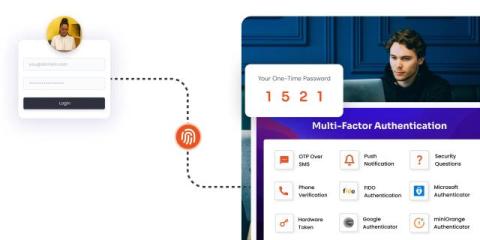
Imagine a typical morning at an enterprise: employees, remote workers, contractors and partners log in, browsing and accessing apps and files they need to do their jobs. All seems calm. But behind the scenes, security teams face a different reality. They’re managing an explosion of high-risk identities and passwords across countless endpoints, dealing with unchecked admin rights, rising security costs and compliance pressures.

Security Culture: Moving Beyond Basic Awareness Training

By James Rees, MD, Razorthorn Security The landscape of cybersecurity awareness has changed dramatically in the last 25 years. What began as simple password guidance and basic IT training has evolved into a complex web of security challenges that organisations must navigate daily. Back in December 1999, the world held its breath waiting for the Y2K bug to wreak havoc on computer systems globally.

Grow Your MSP Practice with SecurityScorecard MAX

Managing vendor security is a growing challenge for MSPs. Clients expect you to deliver enterprise-grade protection across their entire supply chain. However, many struggle with limited resources, manual processes, and the complexity of addressing third-party risks. SecurityScorecard MAX turns this challenge into an opportunity, helping you protect your clients while driving recurring revenue for your business.

A Comprehensive Guide To The NIST Cybersecurity Framework

Businesses are turning to structured cybersecurity approaches like the NIST Cybersecurity Framework (CSF) to protect data from breaches. Especially since the latter’s cost is expected to reach $10.5 million in 2025. The CSF’s core functions (Govern, Identify, Protect, Detect, Respond, Recover) can help mitigate digital risks.