Security | Threat Detection | Cyberattacks | DevSecOps | Compliance

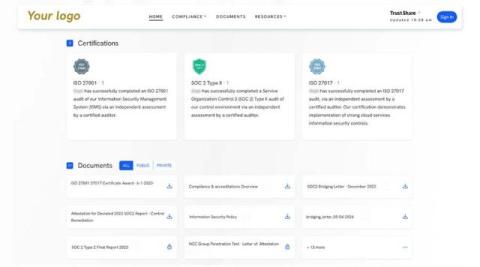
The power of transparency: How a trust center can accelerate enterprise sales and build credibility

In an era of escalating cybersecurity threats, heightened regulatory scrutiny, and increased consumer awareness about data protection, businesses cannot afford to be opaque about their security and compliance practices. Enterprise clients, particularly those in regulated industries, demand visibility into the security posture of their vendors before committing to a business relationship.


Announcing Our UI Update and In-product Dashboards

At LimaCharlie meeting our customer’s needs is a top priority. This means were usually working on new features, extensions, and expanded functionality for the platform. However, we have also received feedback regarding our UI and general suggestions for improving user experience. That is why we’re pleased to announce that we’ve just released a new UI update. You can use the new UI by clicking on the gear icon in the top right corner of the screen.

Massive DDoS on X: Dark Storm or Cyber Fog?

Earlier this week, users of the X (formerly Twitter) social network were either unable to access the platform or experienced service degradation somehow. On March 10, 2025, reports emerged of users worldwide being unable to log in, post, or view content. This incident was later attributed to a large-scale distributed denial-of-service (DDoS) attack targeting X's infrastructure.

The Purdue Enterprise Reference Architecture: Strengthening IoT and OT Security in Industrial Environments

In an era where Industrial Internet of Things (IIoT) and Operational Technology (OT) are converging, securing industrial environments has never been more critical. The Purdue Enterprise Reference Architecture (PERA), a model that has been a foundation for network segmentation and security for over three decades, remains a pivotal framework for safeguarding industrial systems in this complex digital age.

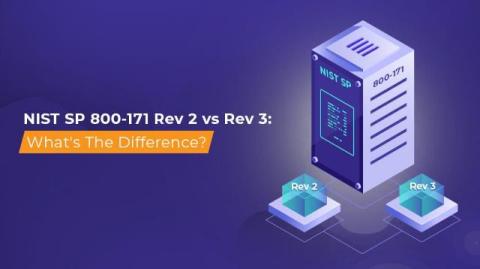
NIST SP 800-171 Rev 2 vs Rev 3: What's The Difference?

Government cybersecurity and information security frameworks are a constant work in progress. Many different frameworks draw their requirements from the National Institute of Standards and Technology, and one of the most important documents for cybersecurity is NIST Special Publication 800-171: Protecting Controlled Unclassified Information in Nonfederal Systems and Organizations.

Beyond Checkboxes: The Essential Need for Robust API Compliance

APIs serve as essential links in today’s digital infrastructure, enabling data sharing and application integration. However, their widespread use has made them prime targets for attackers. Hence, strict compliance with security regulations is not just optional; it is imperative for business success. The increasing frequency of data breaches and the sophistication of cyber threats highlight the pressing need for strong API security.

One PUT Request to Own Tomcat: CVE-2025-24813 RCE is in the Wild

A devastating new remote code execution (RCE) vulnerability, CVE-2025-24813, is now actively exploited in the wild. Attackers need just one PUT API request to take over vulnerable Apache Tomcat servers. The exploit, originally published by a Chinese forum user iSee857, is already available online: CVE-2025-24813 PoC by iSee857.