Security | Threat Detection | Cyberattacks | DevSecOps | Compliance

The AI Supply Chain is Actually an API Supply Chain: Lessons from the LiteLLM Breach

The recent supply chain attack involving Mercor and the LiteLLM vulnerability serves as a massive wake-up call for enterprise security teams. While the security industry has spent the last year fixating on prompt injections and model jailbreaks, this breach highlights a far more systemic vulnerability. The weakest link in enterprise AI is not necessarily the model itself. It is the middleware connecting the models to your data.
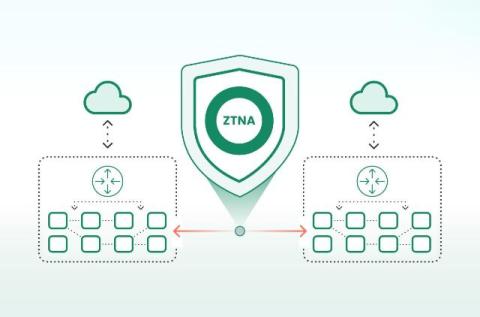
Zero Trust for the East/West Battleground

Most major breaches do not spiral out of control because attackers get in. They spiral because attackers are free to move once they are inside. After gaining an initial foothold through compromised credentials, a misconfigured cloud workload, a remote device, or a third-party connection, sophisticated attackers pivot. They scan the network, escalate privileges, and move laterally across the LAN and datacenter until they reach critical systems.

From Entities to Enterprise Risk: Kovrr's Portfolio Analysis

Global enterprises, private equity firms, conglomerates, and other large-scale organizations may share a corporate umbrella, but the entities operating beneath it are far from uniform. Each functions with a distinct technology stack, industry context, and regulatory environment, which inherently means each carries a distinct cyber exposure. Understanding cyber risk at that higher organizational level, therefore, requires more than individual entity modeling.

AI Governance and Risk: Expert Insights for Enterprise Leaders

‍ As GenAI tools become embedded in core business operations, the governance programs meant to oversee them are still catching up. Closing that gap requires visibility into where AI operates and the ability to express exposure in financial terms that leadership can act on. The organizations best positioned to manage AI risk are those that have already started treating it as a measurable business variable rather than an abstract operational concern. ‍

What makes One Identity an Overall Leader in SAP access control

SAP environments, especially in the age of cloud work and hybrid infrastructures, are ripe with security complications. But SAP support and security is nothing to scoff at. Access controls alone in SAP environments require compliance capabilities for ultimate security, regardless of the security solution or deployment scenario.

Complete Guide to Patch-in-Place SCA Remediation

A definitive guide to how automated and human-reviewed patch-in-place remediation solves both direct and transitive open source vulnerabilities - without forcing risky upgrades. Learn why traditional tools miss transitive risk, and how to evaluate modern platforms based on SLA, provenance, and CI/CD fit.

Evil Token: AI-Enabled Device Code Phishing Campaign

On April 6, 2026, Microsoft Defender Security Research published an advisory detailing a large-scale phishing campaign that leverages the OAuth Device Code Authentication flow to compromise Microsoft 365 accounts across organizations globally. This campaign represents a significant evolution from manual social engineering to fully automated, AI-driven attack infrastructure.

Introducing Relay: Verify who you are while keeping your online activity private

Ask anyone what they think when a website requests a driver's license, Social Security number, or email address, and you'll hear the same reaction: "Why do they need that?" It’s a fair question. Not a day goes by without news of another data breach or scam. Many people have either experienced fraud firsthand or know someone who has. While they're more aware of the need to protect their data, they don't feel equipped to actually do it.