A lot of Indian businesses already did real work for GDPR, an EU customer asked for it, or a vendor contract required it, and the natural next question is how...
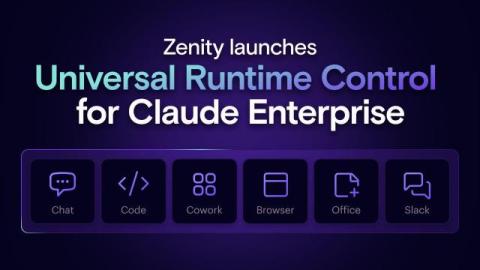
Anthropic's Inference Hooks update lets security teams validate Claude's tool calls before they run. Zenity supports it across Claude's surfaces, so teams can approve write-capable connectors, Model Context Protocol (MCP) servers, and wider Claude Code rollouts with policy on each action.
As AI agents operate with increasing autonomy in enterprise production, the sheer volume of security telemetry they generate creates an unprecedented scaling challenge. Human oversight remains required in many enterprises, while legacy triage tools simply can't keep up. To help security teams cut through the noise, Zenity’s AI group built the Blue Agent.
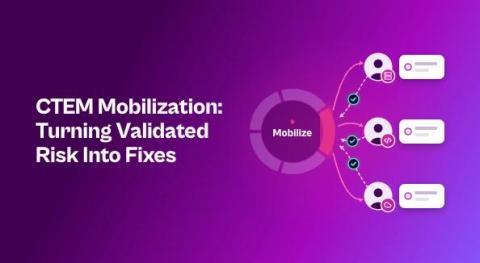
Mobilization is the fifth and final stage of continuous threat exposure management (CTEM). It turns validated, prioritized exposures into action by assigning clear owners, delivering context-rich work into the tools teams already use, choosing the fastest safe response, tracking SLAs, and verifying that fixes worked. It’s often the hardest stage because security teams find exposures but IT, engineering, and cloud teams fix them.
On a recent call, a security lead walked us through two rules his team enforces on every build. Both are sensible. Together, they left his developers with a red pipeline and no version of a library they were allowed to use. The first rule is a cooldown. A new open source release cannot enter the build until it has been public for a set number of days. The second rule blocks any library version with a known high or critical vulnerability.
For the ten years I have watched this industry, hunting business logic vulnerabilities has been notoriously expensive and exceedingly difficult. Every attempt to bring the cost down has hit the same wall. Now, for the first time, we as an industry have the capability to meaningfully lower the ceiling on what this work costs. I would argue Astra’s autonomous pentesting platform is pioneering that shift.
LearnUpon pricing requires a direct conversation because the published listing does not show a fixed starting rate or package breakdown. The available information identifies a subscription-based, paid Learning Management System (LMS) model with no free trial and directs prospective buyers to contact the provider. Understanding these details early helps avoid budget surprises later.
Many companies run their software on cloud servers that come and go on their own. When traffic spikes, new ones switch on automatically. When it drops, they shut down, sometimes less than an hour after they started. That flexibility saves money, but it creates challenges for the people whose job is to investigate attacks.
There are thousands of commercial break-ins reported every year across urban business districts, leaving vulnerable companies facing devastating financial losses and severe operational downtime. Protecting your physical assets, inventory, and employees requires more than just locking the front door after hours. Business owners must look closely at who they trust to secure their premises against evolving threats. Evaluating local security partners carefully prevents costly missteps and ensures long-term safety for your enterprise against professional intruders.
Over time, we have become increasingly accustomed to using AI in our daily work. We send customer data to ChatGPT for analysis, share customer emails to draft responses, or ask Claude to generate code for enterprise applications. All of this can happen within an enterprise environment. This is what generative AI is designed to do. It creates content for us, from text and code to images and videos.