Security | Threat Detection | Cyberattacks | DevSecOps | Compliance

Command and Control Attack Detection: How to Stop Them

To defeat the enemy, you must first disarm their ability to communicate. Command and Control (C2) attacks remain one of the most persistent cybersecurity threats, enabling adversaries to communicate with compromised systems undetected. Attackers use C2 servers to send commands, exfiltrate data, and maintain long-term access to networks. These stealthy techniques allow them to deploy ransomware, steal sensitive information, and even conduct cyber espionage.

AI-Powered Cybercrime: Is Your Business Ready to Defend?

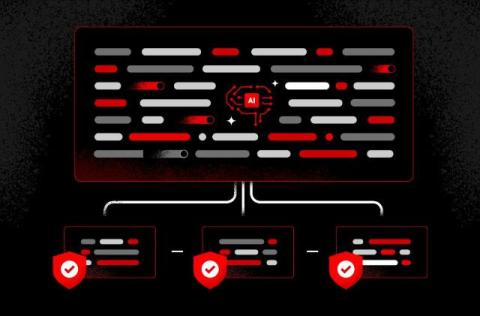
Artificial intelligence (AI) is one of the hottest buzzwords across industries, seemingly connected to almost every aspect of technology. AI models are helping software and tech products take their services to the next level, enhancing speed, accuracy, and efficiency. But this leap forward also introduces a deceptive shadow: AI-powered cybercrime. Companies may feel adequately protected against standard cyber threats, but many underestimate AI-powered cybercrime risks.

Deepfake Reality: My Experience as a Target

Cybersecurity has been my world for years. I’ve worked hard to build my reputation, moving from the hacker underground to a trusted boardroom expert. I take my role seriously because trust and credibility define success in this field. But I recently discovered that even with all my experience, I wasn’t immune to one of today’s fastest-growing threats—deepfake technology.

What is PowerShell? A Complete Guide to Its Features & Uses

PowerShell is a command line shell and scripting language developed by Microsoft. The original version, Windows PowerShell, runs only on Windows and is no longer actively developed; it receives just bug fixes and security updates. The modern version is called simply PowerShell. Built on the.NET framework, it is open source and supports multiple platforms, including Windows, macOS and Linux. Here is a summary of the product’s evolution.

vCISO Program Leadership and Organizational Change Management as a Service: HITRUST CSF Implementation

Program leadership and organizational change management are essential to the successful implementation of the HITRUST CSF. Leadership provides the strategic direction, resources, and decision-making authority needed to drive the initiative, while OCM ensures that the cultural and behavioral aspects of the change are effectively managed.

The Top 6 PAM Features That You Actually Need

Privileged Access Management (PAM) is a subset of Identity and Access Management (IAM) that specifically addresses controlling access for users who work with the most sensitive systems and data within an organization, such as IT, information security and DevOps personnel. Among other tasks, PAM enforces the principle of least privilege, which grants users the minimum level of systems and data access they need to do their jobs.

Palo Alto Zero Day Vulnerability CVE-2025-0108 Exploited in the Wild

On February 18, CISA has added the recently published Palo Alto Networks CVE-2025-0108 to the list of known exploited vulnerabilities. To date, according to GreyNoise, there are over 25 known distinct public sources attempting exploitation. Unmitigated, this vulnerability can lead to significantly weakened network defenses and open doors for data leakages, financial compromises, and ransomware down the road.

Unlock the Full Potential of Microsoft FastTrack with Trustwave

There was once a famous advertising tagline used in TV commercials. "But wait, there's more!" This line was used to sell knives that could cut through a soda can and stay sharp enough to slice a tomato, but now there is a more up-to-date situation where the line is still applicable. "You bought Microsoft 365, great!

Data Security Platforms Are Essential for Modern Businesses

The way we think about data security is changing. Organizations need to protect sensitive information while still making it accessible for innovation and business growth. But as cyber threats grow more sophisticated and regulations become more stringent, security teams face a major challenge. This is where Data Security Platforms (DSPs) come in—they provide a unified approach to safeguarding data, ensuring compliance, and reducing complexity.