This year's Devner OWASP event showed why modern AppSec depends on secure defaults, stronger provenance, and security controls that appear where developers make decisions.
Accelerating security solutions for small businesses Tagore offers strategic services to small businesses. A partnership that can scale Tagore prioritized finding a managed compliance partner with an established product, dedicated support team, and rapid release rate. Standing out from competitors Tagore's partnership with Vanta enhances its strategic focus and deepens client value, creating differentiation in a competitive market.
See how Torq harnesses AI in your SOC to detect, prioritize, and respond to threats faster. Request a Demo The AI SOC is cybersecurity’s fastest-growing category, and for very good reason. Machine-speed threats demand machine-speed responses, and the $82.45 billion market forming around this reality reflects just how urgent that need has become. The Torq AI SOC Platform delivers agentic insights and the ability to streamline action across the full security stack.
Organizations across the Asia-Pacific region are accelerating adoption of open infrastructure, Kubernetes, and modern virtualization platforms. As these environments grow, protecting applications and data becomes a core operational requirement. The strategic partnership between Trilio and Bigstack to deliver integrated cloud-native data protection and migration capabilities for enterprises deploying modern private and hybrid cloud environments.
Many engineering teams treat zero trust as a simple MFA checkbox. They invest in advanced identity providers but still leave environments exposed, with permanent admin roles and manual ticket queues that frustrate developers. Most teams have adopted the language of zero trust without changing how access actually works. They verify identity at login, then leave broad permissions in place long after the task is done.
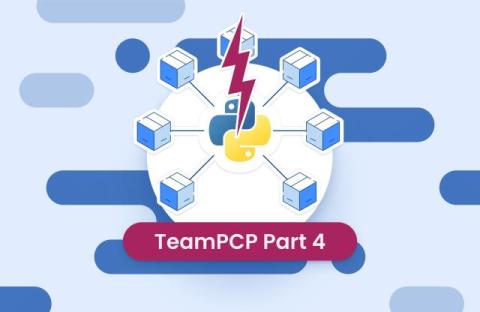
Part 1 covered CanisterWorm. Part 2 covered the malicious LiteLLM package. Part 3 covered the Telnyx WAV steganography attack. This post covers the latest wave: three malicious versions of xinference on PyPI, carrying the same credential-stealing playbook and a plot twist. On April 22, 2026, Mend.io’s threat detection identified malicious versions of xinference on PyPI: 2.6.0, 2.6.1, and 2.6.2.
Your platform team deployed eBPF-based runtime sensors on AKS last week. Defender for Containers is enabled. Azure Policy is enforcing pod security standards across your AI workload namespaces. And your Observe pillar is still blind — because nobody enabled the Diagnostic Setting that routes kube-audit logs to the Log Analytics workspace where your tooling can actually consume them.
A CISO at a mid-sized SaaS company pulls her platform lead aside after a board meeting. One question: “Do we have AI agents running in production?” The lead pauses. He knows the data science team has been experimenting with LangChain. He remembers a conversation about a customer-support pilot. He thinks there might be an inference server in staging that got promoted last quarter.
A patient calls your privacy office and requests an accounting of every disclosure of her PHI made outside treatment, payment, and healthcare operations over the past six years. This is her right under HIPAA. Your privacy officer pulls the EHR disclosure log. It is complete through the day your organization deployed its first production AI agent.
Cloud environments create a flood of security signals, often reaching tens of thousands per day depending on the organization’s size. Security engineers and analysts spend a disproportionate share of their time triaging these signals instead of acting on legitimate threats. But the time-intensive parts of that work, such as identifying related signals and building a timeline, can be handled systematically, leaving teams free to focus on what actually requires human judgment.