Security | Threat Detection | Cyberattacks | DevSecOps | Compliance

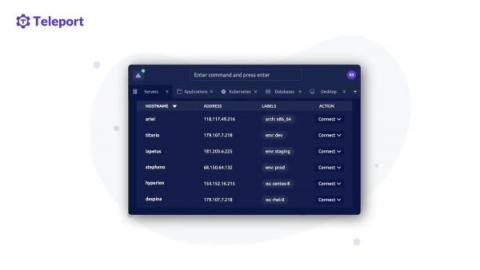
Teleport Demo - 30 Minute Overview

0:00 Intro

1:00 Architecture Overview

3:00 Single Sign On Integration

5:00 Teleport Server Access

7:00 tsh and session recordings

9:00 Teleport App Access

11:00 RBAC Mapping

12:05 Teleport K8s Access

15:00 Teleport DB Access

18:00 Teleport RDP Access

22:00 Access Requests

24:00 Teleport Slackbot

26:00 Active Session Joining
27:00: Trusted Clusters

28:00 Open Source vs Enterprise

How to Deploy Pods in Kubernetes?

Kubernetes leverages various deployment objects to simplify the provisioning of resources and configuration of workloads running in containers. These objects include ReplicaSets, lSets, Sets, and Deployments. A pod is the smallest deployment unit in Kubernetes that usually represents one instance of the containerized application.

Team Up on DevSecOps with JFrog Platform App for Microsoft Teams

The JFrog DevOps Platform is your mission-critical tool for your software development pipelines. The results of key binary management events in Artifactory, Xray, and Distribution can reveal whether or not your software pipelines are on-track to deliver production-quality releases.

Kubescape: A Kubernetes open-source platfrom providing a multi-cloud Kubernetes single pane of glass

Kubescape is a Kubernetes open-source platform providing a multi-cloud K8s single pane of glass, including risk analysis, security compliance, RBAC visualizer, and image vulnerabilities scanning.

A Brief Guide to Cloud-Native Applications, Technology, and Security

What are cloud-native applications? According to the Cloud Native Computing Foundation (CNCF), the term “cloud native” describes systems that are specifically designed to help build and run scalable applications in all cloud environments, including public, private, and hybrid clouds. Cloud-native applications use the attributes of cloud architecture in ways that legacy systems can’t. They don’t need any onsite computing infrastructure and can scale quickly to meet demand.

WebAuthn Explained

The WebAuthentication API, or WebAuthn, facilitates secure authentication based on public-key credentials. The idea of passwordless and public-key authentication is not new, but the compatibility and interoperability of various elements in the authentication process were always weak. WebAuthn API aims to solve that problem by bringing the uniform authentication API into web browsers.

Integrate Arista CloudVision with Forward Enterprise to Automate Network and Security Verification

Network automation has many benefits for organizations adopting a DevOps model for managing their infrastructure, including speed, agility, and a consistent change control process. However, with improvements in speed, there comes an added risk of configuration errors rapidly propagating through the network. To safeguard against potential mistakes, network and security verification become an essential part of the network DevOps lifecycle.

Snyk Live : Legal Side of Open Source Use with Yos Pang

Open source use has spread rapidly throughout the world. With many governments, businesses and consumers utilising open source libraries and platforms on a daily basis. As the adoption of open source has increased there are many legal aspects to consider including licensing, compliance and more. This special episode of Snyk Live we are joined by Snyk Head of APJ Legal, Yos Pang. Yos is an international, commercial technology lawyer, with a strong background in intellectual property and a particular interest in open source and open content issues.

CI/CD pipeline attacks: A growing threat to enterprise security

CI/CD pipeline attacks are a growing threat to enterprise security. In this article, we’ll provide an overview of CI/CD for non-developers, discuss the cybersecurity issues involved, and offer some recommendations for developers, companies, and security teams.