Security | Threat Detection | Cyberattacks | DevSecOps | Compliance

Implementing Robust Security Protocols for Agentic AI Autonomy

In this new wave of machine-driven decision-making, the paradigm shift in artificial intelligence towards increasing autonomy is becoming increasingly significant. Autonomous or agentic AI systems, those capable of acting on their own and acclimatising themselves to new environments, are redefining the space by taking actions towards a goal without direct human intervention. Although this is exciting in terms of what it will enable for AI driven processes and creativity, it also introduces a more advanced set of security risks to contend with when dealing with autonomous based AI systems.
Featured Post

Moving Beyond Compliance to True Resilience

Organisations can no longer afford to rely solely on achieving compliance as a defence strategy. Cyber threats are not only more sophisticated, they are relentless. While regulatory compliance sets a baseline, true cyber resilience demands a proactive, layered approach. Businesses must not only pass audits but also recover seamlessly from cyber-attacks to avoid disruption to business continuity.

Why ISO 27001 Auditors Can Reject Documentation

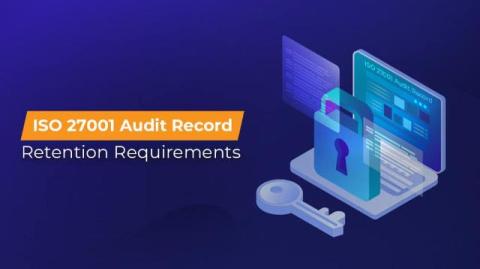
ISO 27001 is one of the most complex security frameworks commonly in use around the world. That complexity comes from the way it is designed: not as a checklist to follow, but rather as a series of guidelines to achieve. The difference between those two things is stark, even if it doesn’t sound like it. The way ISO 27001 works is that you develop an ISMS, or Information Security Management System.

The final CMMC rule is here-enforcement starts November 10

After years of drafts, revisions, and shifting timelines, the Cybersecurity Maturity Model Certification (CMMC) program is no longer just a concept. It's a contractual requirement, and enforcement begins soon. ‍ On September 9, 2025, the U.S. Department of Defense (DoD) released the final CMMC rule (48 CFR) for public inspection, with official publication in the Federal Register on September 10. From this point forward, all DoD contracts require some level of CMMC certification. ‍

Simplify NYDFS 500.7 Compliance With KeeperPAM

Organizations regulated by the New York Department of Financial Services (NYDFS) must adhere to 23 NYCRR Part 500, a cybersecurity regulation designed to protect sensitive consumer data and financial systems. Among its core requirements, Section 500.7 specifically focuses on access privileges, requiring financial services companies to implement controls that limit access to nonpublic information based on the principle of least privilege.

CyberArk empowers Australia's cyber resilience with IRAP assessment completion at the protected level

As ransomware strains hospital operations and supply‑chain attacks target energy grids, Australia’s public and regulated sectors need proven cyber resilience. At the heart of most breaches lie human error and weak identity controls, making the Infosec Registered Assessors Program (IRAP) assessment program the gold standard for moving sensitive workloads to the cloud.

Beyond PCI and HIPAA: How Feroot Powers General Data Protection Regulation (GDPR) Compliance

Yes. If your website is accessible in the EU and collects any user data—through forms, cookies, session recordings, pixels, or embedded scripts—then GDPR likely applies. But compliance isn’t as simple as publishing a privacy policy or showing a cookie banner. Modern web apps expose personal data through invisible front-end technologies like third-party JavaScript, ad tags, tag managers, and behavioral trackers.

AI and Compliance: Preventing Personally Identifiable Information Leakage

AI and Compliance: Preventing PII Information Leakage In this video, A10 Networks' security leaders, Jamison Utter, Madhav Aggarwal, and Diptanshu Purwar, delve into the growing security risks associated with the adoption of conversational AI bots and Large Language Models (LLMs), particularly in sensitive fields such as healthcare. Diptanshu Purwar highlights several key concerns.

Intergrating Secure Lifecycle into DevOps for PCI DSS Compliance

SLC refers to the entire process of developing and maintaining software, encompassing various stages like planning, design, development, testing, deployment, and maintenance. The average cost of a data breach in the financial sector is approximately $5.85 million. Incorporating security into DevOps can significantly reduce these costs by preventing breaches early. Around 73% of organizations have adopted DevSecOps practices to embed security into their DevOps pipelines.

How NDIS Software Is Revolutionising Disability Support Services in Australia

In recent years, the disability support sector in Australia has undergone a remarkable digital transformation. With the National Disability Insurance Scheme (NDIS) at the core of service delivery, the integration of NDIS software has become a game-changer for providers and participants alike. From streamlining admin tasks to enhancing client care, NDIS software is revolutionising how disability support services operate across the country.