Security | Threat Detection | Cyberattacks | DevSecOps | Compliance

Gravity: Running Cloud Applications in Remote, Restricted and Regulated Environments.

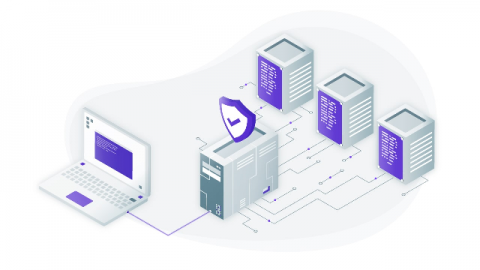
Gravity is an application delivery system that lets engineers deliver and run cloud-native applications in regulated, restricted, or remote environments without added complexity. Gravity works by putting applications and all their dependencies onto a single deployable file, which can be used to create hardened Kubernetes clusters that can reliably and securely run in any Linux environment: edge, multi-cloud, private cloud, on-prem, and air-gapped.

Webinar on Key to Effective Cloud Security in 2020

Cloud migration challenges Few applications don’t work well on cloud-like how they work on-premises, IT leaders need to figure out cloud migration failures in such instances as it could be due to poor latency, compliance challenges or security concerns. Due to the higher cost of cloud people generally think applications will work well however it is not the case as few applications won’t work well on the cloud that is why it is important for managers to rethink their strategies.

The Future is Hybrid: Practicing Security in the Hybrid Cloud

By now, many organizations have adopted the cloud in some way. We saw organizations moving whole servers over to the cloud at the beginning, but now we see small parts of a system being moved to the cloud and new cloud native offerings. We’ll use the analogies of Lincoln Logs and Legos to describe these deployment models.

What COVID-19 teaches us about Micro-segmentation and Run-time Cloud Workload Protection

March 2020, the Coronavirus is pretty much everywhere. As I am writing these lines, the number of cases worldwide is 341,334 and 192 different countries have experienced infections.The world is fighting this epidemic and travel limitations are widely used in order to control the spread of the disease. While some say these restrictions are critical, others claim it to be ineffective and redundant. I am not an epidemiologist and will leave that analysis to the experts.

Amazon VPC Traffic Mirroring

The first means to collect security-relevant information at Cloud SIEM Enterprise (CSE) was our Network Sensor. It was built to analyze network traffic and provide visibility beyond traditional SIEM's down to the network-level. Beyond organizing packets into flows, the sensor supports more advanced features such as decoding of common protocols, file carving, SSL certificate validation, OS fingerprinting, clustered deployment and more.

NSA Releases Cloud Vulnerability Guidance

The United States’ National Security Agency (NSA) has put together a short guidance document on mitigating vulnerabilities for cloud computing. At only eight pages, it is an accessible primer for cloud security and a great place to start before taking on something like the comprehensive NIST 800-53 security controls.

Recently found Azure vulnerabilities underline the importance of Zero-Trust for cloud workloads

Check Point researchers recently published two vulnerabilities they’d found in Microsoft’s Azure cloud services. These flaws highlight a wave of potential attacks on cloud infrastructure and the exposure of workloads running in multi-tenant cloud environments.

IBM and Sysdig team up to extend security governance with IBM Cloud Pak for Multicloud Management

Sysdig, an industry leader for monitoring and security of cloud-native workloads, and IBM have joined forces to bring a fully Integrated powerful platform that delivers the security and performance that enterprises need in today’s multi-cloud world. Sysdig Secure and the IBM Cloud Pak for Multicloud Management (MCM) can help you accelerate Kubernetes and cloud adoption by addressing security and regulatory compliance from the start on enterprise hybrid cloud environments.