KeyScaler for Microsoft Azure Sphere - IoT security lifecycle management
Using Device Authority's KeyScaler platform to manage PKI certificate provisioning to Microsoft Azure Sphere devices.


2020, as a year, has been anything but predictable, but we’re proud to say we got even a few things right. Here’s a look back at some pretty big trends, a couple of things that sort of happened, and at least one big miss.
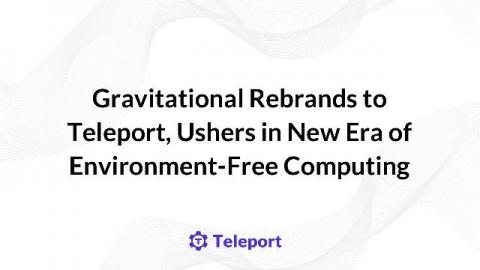
Dear Reader, Today we are officially announcing that Gravitational is becoming Teleport. As part of the transition, we are launching a new website and moving from gravitational.com to https://goteleport.com. But that’s not the most important part. A much more interesting side of the story is why we are doing this and the new product announcements and the direction we are taking.
OAKLAND, Calif. – Nov. 19, 2020 — Gravitational, a pioneer in environment-free computing, announced today that the company has changed its name to Teleport, effective immediately.
Today, we are announcing the availability of Teleport 5.0. This is a major release for the project with numerous improvements and new features, but the hallmark capability of this version is the Unified Access Plane and Application Access for Developers. For those unfamiliar with Teleport, it is an open source project for giving developers secure remote access to everything they need.