Security | Threat Detection | Cyberattacks | DevSecOps | Compliance

Taking a Look at Security Issues with Open Storage Buckets

Now that we’ve explored the familiar form of SaaS file sharing, let’s compare it to the very different ways that storage objects in IaaS/PaaS clouds are shared (e.g., Amazon S3 buckets, Azure blobs, Google Cloud storage). All of these objects begin with a much more controlled default. Only the owner of the object has access—the opposite of the starting point for SaaS.

How can healthcare reinvent itself in the Cloud to prevent cyber threats?

Technological advances in the healthcare sector have led to increased interconnectivity and Cloud-based infrastructures in order to maintain physical distance due to COVID-19 and address the urgent need to deal with overwhelming patient volumes through online care. According to data from Global Markets Insights, the healthcare Cloud computing market was valued at over $29 billion in 2020 and is expected to be worth $79.3 billion by 2027, with a CAGR of 13.4%.

Addressing the Invisible Security Problem of Open File Shares

According to a recent survey from the Cloud Security Alliance, cloud issues and misconfigurations remain the leading causes of breaches and outages—and 58% of respondents report concerns about security in the cloud. Their worries are well-founded. Nearly every day, we see examples of a company’s sensitive data spilling out of leaky clouds.

How Netskope Intelligent SSE and Aruba Secure SD-WAN Integrate for SASE Success

At Netskope, our primary focus in the marketplace is to help customers protect their data. More and more data exists outside the traditional enterprise perimeter and is growing at an ever-rapid pace. More than 80% of users are using personal apps and instances from managed devices, and of those applications being accessed, roughly half would be given a “Poor” risk rating by the Netskope Cloud Confidence Index.

Why Your Cloud Migration Is Causing Security Risk

You've migrated to the cloud, which has made you more efficient and agile. But this comes with new security challenges. Your data is outside your corporate network: In public clouds, on personal devices, on unsanctioned apps, and handled by networks you don't own. The more spread out your data is, the less visibility and control you have.

The Developer's Essential Guide to Cloud Deployment Models

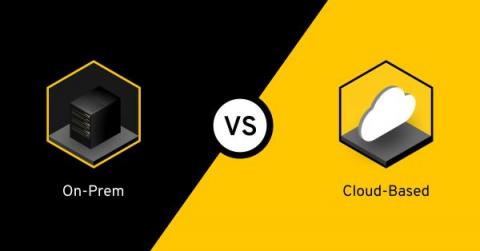
You’ll probably agree that there are barely any organizations left that don’t use some form of cloud computing in their daily operations. In fact, the cloud computing market is booming, with various sources expecting a worth of upwards of $600 billion within the next two years. And it makes sense: Cloud computing is the cheaper, scalable, easier-to-manage young cousin of yesteryear’s private server.

Implementing zero-trust workload security on Amazon EKS with Calico

Whether you’re migrating to the cloud via lift-and-shift deployments, or re-architecting to a cloud-native architecture, the migration itself and adopting a microservices architecture is no easy feat. To accelerate their cloud-native journey, many organizations opt for a managed Kubernetes service, as the skill and resources required to run a container orchestration system at scale are demanding.

Delivering More (Security) with Less (Overhead) Thanks to Netskope and Mandiant

For most companies, security and IT systems are growing in complexity, breadth of scope, and coverage, which consumes budget and staff time. The rapid breakdown of the traditional perimeter in this “new normal” world increases the challenges IT teams and remote users face on a daily basis.

Keeping your Kubernetes Backup Data Private with Azure Private Link

At CloudCasa, as a cloud-native backup-as-a-service provider, we are often dealing with customer concerns about the security and privacy of their data. Sometimes the concern is almost paradoxical because the data and application they are protecting is publicly accessible and running inside the public cloud. However, there are times when organizations use public cloud infrastructure with a network architecture that resembles a private cloud.