Security | Threat Detection | Cyberattacks | DevSecOps | Compliance

The Role of AI Calling in Secure Business Communication

Every business depends on phone conversations. Customers share account details, teams discuss deals, and managers make quick decisions over the line. Because so much sensitive information travels through voice, protecting it matters as much as protecting email or stored files. This is where AI calling has started to play a useful part. In simple terms, AI calling means using artificial intelligence to place, answer, or manage phone calls, often by understanding speech and responding in a natural way. When it is set up with care, it can make business communication safer as well as smoother.

How Low-Latency Infrastructure Supports Automated Trading

Automated trading sounds simple on paper. You write a set of rules, a program follows them, and trades happen without you watching the screen. In practice, the speed and reliability of the system behind those rules matter just as much as the rules themselves. This is why many traders look at tools like a trading VPS, which is a virtual private server that runs your trading software in a professional data center instead of on a home computer. To see why that matters, it helps to understand what low latency really means and how it shapes every automated trade.

Non-Human Identity Management in Atlassian Cloud

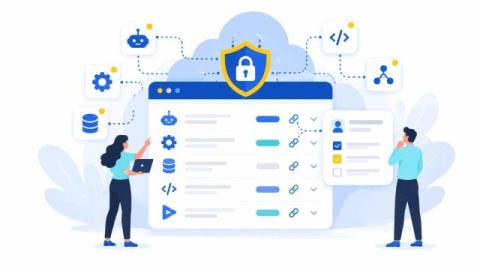
Ask a security team how many employees they have and they will answer instantly. Ask how many non-human identities they have, and the room goes quiet. Non-human identities (NHIs) are the identities that applications, services and automation use to act in a system. Service accounts, automation users and bot logins are identities, while API tokens, keys and certificates are the credentials they authenticate with, and teams have to govern both. These identities run deployments, sync data, post notifications and generate reports, usually without anyone watching.

Breaking down digital security: What actually matters

We've heard everyone talk about digital privacy, cybersecurity, and how we should set a strong password, but what most people fail to understand is the why. Why is it important to set a strong password? Why do we have to activate two-factor authentication? Why are software updates important? Even though we have a vague idea of why we need to do these things, we really don't know the future implications if we don't secure our digital information.

CVE-2026-70111: How Corelight uncovered a 0-Day affecting Microsoft Distributed File System

In the process of fuzzing MS-RPC and Distributed File System (DFS) APIs, we discovered a one-packet mechanism set to crash an entire Windows server, which the Microsoft Security Response Center (MSRC) later assigned as CVE-2026-70111.

AI Trust Starts With Knowing the Source

An AI agent produces a recommendation that looks reasonable. It's accurate. The model didn't hallucinate. Can the organization trust it? That depends on questions the output can't answer: Enterprise trust requires knowing where information came from, how it moved, what happened to it, and whether the process behind the result deserves confidence. Provenance is where that trust starts.

Best Practices in Maintaining HIPAA Compliance for Healthcare Applications

If you build, own, or secure software that touches protected health information (PHI), you already know that HIPAA compliance for healthcare applications is not a box you check before a release and forget until the next audit. It’s a continuous operating requirement, and the gap between what most teams actually do and what HIPAA demands is widening fast.

Learning never stops: Why reskilling is Acronis' answer to a changing job market

Singapore's labour market is changing, and the numbers show it. The Ministry of Manpower's (MOM) latest Q2 2026 labour report recorded 4,620 retrenchments in the second quarter of 2026, the highest since the end of 2020. Job vacancies slipped to 68,600, with the sharpest falls in professional roles in financial services and in information and communications. Laid-off residents are also taking longer to find their next role. Only 54.9% found work within six months, down from 60.7% the previous quarter.